
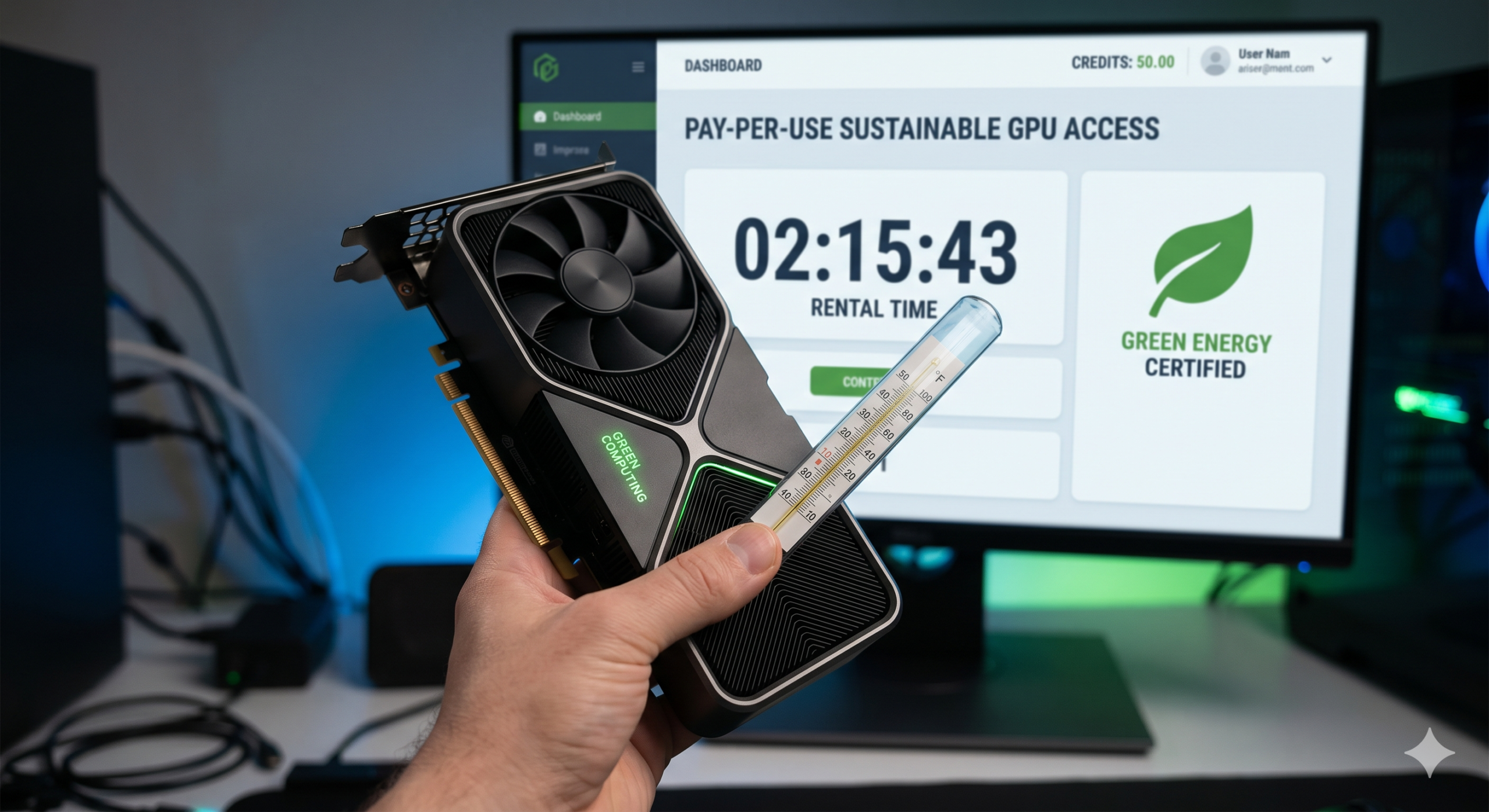
Explore Capa.Cloud GPU rental pricing, AI benchmarks, and real-world use cases. Compare decentralized GPU cloud infrastructure for AI training, inference, and scalable compute workloads.
Key Takeaways
- Decentralized GPU rental platforms like Capa.Cloud gives businesses flexible access to distributed GPU infrastructure without the high upfront cost of owning hardware.
- GPU rental pricing varies based on hardware tier, VRAM capacity, workload duration, and demand, with decentralized marketplaces often offering more flexible and cost-efficient scaling.
- Benchmark metrics such as VRAM, inference throughput, latency, memory bandwidth, and multi-GPU performance are critical when evaluating GPUs for AI training and inference workloads.
- Common GPU rental use cases include large language model training, generative AI, inference APIs, rendering, scientific computing, and scalable SaaS AI infrastructure.
- As AI compute demand continues to grow, decentralized GPU cloud networks are becoming an increasingly important alternative to traditional centralized cloud providers.
Artificial intelligence workloads are pushing GPU infrastructure demand to new levels. Companies building AI products, training large language models, running inference APIs, or deploying generative AI applications increasingly need flexible access to high-performance GPUs without the massive cost of building in-house infrastructure.
That demand has accelerated interest in decentralized GPU cloud platforms. Instead of relying entirely on centralized hyperscale data centers, decentralized GPU marketplaces distribute compute resources across a global network of providers. This approach can improve GPU availability, reduce infrastructure bottlenecks, and offer more flexible pricing for businesses that need scalable compute on demand.
Capa.Cloud positions itself within this growing category as a decentralized GPU rental platform designed for AI workloads, machine learning infrastructure, rendering pipelines, and high-performance compute tasks.
For businesses comparing GPU rental providers, pricing transparency and deployment speed matter just as much as raw compute performance. Teams often evaluate platforms based on hourly GPU pricing, scalability, hardware availability, orchestration tools, inference performance, and ease of deployment.
This guide breaks down how decentralized GPU rental works, how GPU pricing is typically structured, the benchmark metrics that matter most for AI workloads, and the real-world use cases driving demand for distributed GPU infrastructure.
What Is CapaCloud GPU Rental?
Understanding Decentralized GPU Cloud
A decentralized GPU cloud is a distributed network of compute providers that contribute GPU resources to a shared marketplace. Instead of operating from a single centralized infrastructure provider, decentralized GPU clouds aggregate underutilized GPUs from multiple operators across different regions.
This model allows developers, AI teams, and businesses to rent GPU resources on demand while potentially reducing infrastructure costs and increasing compute availability.
Traditional cloud GPU infrastructure is often controlled by a small number of hyperscale providers. Decentralized GPU platforms aim to introduce greater flexibility by distributing compute capacity across independent providers.
How Capa.Cloud Works
Capa.Cloud operates as a decentralized GPU rental marketplace where compute resources can be provisioned dynamically based on workload requirements.
A typical GPU rental workflow may include:
- Creating an account and selecting compute requirements
- Choosing GPU hardware based on workload type
- Configuring deployment settings and runtime environments
- Launching workloads through APIs or orchestration tools
- Monitoring infrastructure usage and performance
- Scaling resources up or down as demand changes
- Paying based on actual compute consumption
Core platform capabilities may include:
- GPU resource allocation
- Distributed workload scheduling
- On-demand compute provisioning
- Elastic scaling
- Usage-based billing
- Multi-region resource availability
- Container deployment support
- API integrations
- Monitoring dashboards
- Workload orchestration
- Queue management
- Autoscaling infrastructure
This architecture supports organizations that need flexible compute capacity for workloads that may vary significantly over time.
Why Businesses Need GPU Rental Platforms
Rising Demand for GPU Compute
Modern AI applications require enormous compute resources. Training and deploying advanced AI models often depend on GPU acceleration because GPUs can process highly parallel workloads far more efficiently than CPUs.
Enterprise AI adoption continues to expand rapidly across industries, especially as organizations deploy internal copilots, generative AI systems, retrieval-augmented generation pipelines, and real-time inference infrastructure.
Industries increasingly using GPU rental platforms include:
- Artificial intelligence and machine learning
- Generative AI development
- Scientific research
- Financial modeling
- Media rendering
- Simulation and analytics
- Computer vision
- Autonomous systems
- SaaS infrastructure
- Healthcare AI
- Gaming platforms
The growth of large language models, AI image generation systems, video generation tools, and inference APIs has also contributed to global GPU shortages in some regions. Many businesses now look for alternative compute infrastructure models that provide faster provisioning and more flexible access to GPU hardware.
Challenges With Traditional GPU Clouds
Many businesses encounter limitations when using centralized GPU cloud providers.
Common challenges include:
- High Infrastructure Costs: Enterprise-grade GPUs can be expensive to rent at scale, particularly for long-running workloads.
- Capacity Constraints: Popular GPU models frequently experience shortages during periods of elevated demand.
- Vendor Lock-In: Centralized ecosystems may limit portability between providers.
- Geographic Limitations: GPU availability may vary significantly across regions.
- Long-Term Commitments: Reserved capacity models can reduce flexibility for rapidly changing workloads.
Advantages of Decentralized GPU Rental
Decentralized GPU marketplaces attempt to address many of the limitations associated with centralized cloud infrastructure by aggregating distributed compute supply.
Potential benefits include:
- Increased GPU availability
- Flexible scaling
- Access to globally distributed resources
- Potential cost reductions
- Faster provisioning
- Reduced infrastructure overhead
- More granular workload allocation
This infrastructure model can be especially useful in scenarios such as:
- Burst Inference Demand: AI applications with fluctuating traffic may need temporary access to additional GPU capacity during peak usage periods.
- Temporary Training Workloads: Organizations training or fine-tuning models may only need large GPU clusters for limited periods.
- Startup Experimentation: Early-stage AI companies often prefer renting GPUs instead of investing heavily in hardware purchases.
- Rendering & Batch Processing: Studios and media teams can temporarily scale rendering capacity for short production cycles.
This approach may appeal to startups, AI labs, research organizations, SaaS companies, and enterprises seeking scalable compute without large upfront infrastructure investments.
Capa.Cloud GPU Rental Pricing
How GPU Rental Pricing Works
GPU rental pricing is typically based on several variables, including the type of GPU, resource availability, workload duration, and associated infrastructure costs.
Most decentralized GPU marketplaces use usage-based billing structures that charge customers hourly or by workload consumption.
Common pricing factors include:
- GPU model and performance tier
- VRAM capacity
- Compute duration
- Geographic region
- Demand fluctuations
- Storage requirements
- Bandwidth usage
- Multi-GPU configurations
Example GPU rental pricing may look like:
| GPU Tier | Typical Use Case | Estimated Hourly Range |
|---|---|---|
| Entry-Level GPUs | Development, testing, lightweight inference | $0.20 to $1.00/hour |
| Mid-Range AI GPUs | Fine-tuning, production inference | $1.00 to $4.00/hour |
| Enterprise AI Accelerators | Large-scale training and distributed AI | $4.00+/hour |
Actual pricing varies depending on supply, workload demand, deployment duration, and hardware availability.
Higher-end GPUs designed for AI training and inference generally command premium pricing because of their compute density, tensor performance, and memory capacity.
Decentralized vs Traditional GPU Cloud Pricing
Decentralized GPU rental models can sometimes provide lower pricing than centralized cloud infrastructure because they utilize a distributed compute supply from multiple providers.
Traditional hyperscale GPU infrastructure often includes:
- Significant operational overhead
- Data center expansion costs
- Regional infrastructure constraints
- Premium enterprise pricing
Distributed marketplaces may reduce some of these costs by leveraging underutilized GPU resources across independent networks.
| Feature | Decentralized GPU Marketplaces | Traditional GPU Clouds |
| Pricing Flexibility | Often dynamic and usage-based | Usually standardized |
| GPU Availability | Distributed global supply | Region dependent |
| Provisioning Speed | Can be highly flexible | May face regional shortages |
| Infrastructure Ownership | Distributed providers | Centralized providers |
| Scalability | Elastic and distributed | Centralized scaling |
| Cost Structure | Potentially lower during surplus supply | Often, premium enterprise pricing |
Pricing can still fluctuate depending on GPU demand, network congestion, and hardware availability.
Factors That Affect GPU Rental Costs
Several operational variables can influence total compute spend.
- Workload Duration: Long-running training jobs typically generate higher compute costs than short inference tasks.
- Multi-GPU Scaling: Distributed training clusters require multiple synchronized GPUs, increasing overall infrastructure consumption.
- Data Transfer: Bandwidth-heavy workloads may incur additional costs.
- Storage Requirements: Large datasets and checkpoints increase storage usage.
- Peak Demand Periods: GPU shortages can temporarily increase pricing across marketplaces.
Optimizing GPU Rental Spend
Organizations can improve computing efficiency using several optimization strategies.
- Autoscaling: Automatically scaling infrastructure based on workload demand can reduce idle compute costs.
- Right-Sizing GPU Resources: Selecting the appropriate GPU tier for a workload prevents unnecessary overspending.
- Batch Scheduling: Batch processing workloads can improve utilization efficiency.
- Spot Workloads: Some GPU marketplaces may offer discounted compute capacity during periods of lower demand.
- Model Quantization: Optimizing model size can reduce memory usage and inference costs.
- Checkpoint Optimization: Efficient checkpoint handling reduces storage and transfer overhead.
- Off-Peak Scheduling: Running certain workloads during lower-demand periods may reduce pricing volatility.
- Efficient Model Design: Smaller, optimized models may reduce GPU usage while maintaining acceptable performance.
GPU Benchmarks & Performance Analysis
Why GPU Benchmarks Matter
GPU benchmarks help organizations evaluate performance characteristics across different hardware configurations.
Benchmarking is particularly important for:
- AI model training
- Inference optimization
- Cost-to-performance analysis
- Infrastructure planning
- Multi-GPU scaling decisions
Selecting the wrong GPU configuration can significantly impact training times, inference latency, and infrastructure costs.
Common GPU Benchmark Metrics
Several benchmark metrics are widely used to evaluate GPU performance.
- TFLOPS: Measures raw compute throughput for floating-point operations.
- VRAM Capacity: Determines how large a model or dataset a GPU can process efficiently.
- Memory Bandwidth: Affects how quickly data moves between GPU memory and processing units.
- Inference Throughput: Measures the number of requests or tokens processed over time.
- Latency: Critical for real-time AI applications and inference APIs.
- Energy Efficiency: Important for infrastructure optimization and operational cost management.
Organizations also frequently evaluate GPUs using:
- MLPerf benchmark testing
- CUDA performance benchmarks
- Tensor processing benchmarks
- AI inference throughput testing
- Multi-GPU scaling benchmarks
- LLM inference evaluations
- Stable Diffusion rendering tests
AI & Machine Learning Workload Benchmarks
Large Language Model Training
LLM training workloads require high memory capacity, fast interconnects, and scalable multi-GPU coordination.
Benchmark considerations include:
- Training throughput
- Token processing speed
- Distributed synchronization efficiency
- Checkpoint performance
Teams may benchmark workloads involving open-source models such as Llama-based architectures and other transformer systems.
AI Inference
Inference benchmarks prioritize low latency and high request throughput.
Real-time AI applications depend heavily on optimized inference performance.
Common benchmark scenarios include:
- Tokens generated per second
- API response latency
- Multi-user inference concurrency
- Retrieval-augmented generation performance
Image Generation & Computer Vision
Computer vision and image generation models often require substantial GPU memory bandwidth and tensor processing performance.
Common benchmark workloads include:
- Stable Diffusion image generation speed
- Flux model inference performance
- Batch image rendering
- Vision model throughput
- Resolution scaling efficiency
Rendering & Simulation
Rendering workloads rely heavily on GPU parallelism.
Industries such as animation, gaming, architecture, and VFX frequently benchmark:
- Rendering time
- Ray tracing performance
- Scene complexity handling
- Multi-node scalability
Comparing GPU Classes
Different GPU tiers are optimized for different workloads.
- Consumer GPUs: Consumer GPUs are commonly used for experimentation, development environments, lightweight AI inference, and small-scale training.
- Workstation GPUs: Workstation hardware is often optimized for rendering, simulation, engineering, and professional visualization workflows.
- Enterprise AI Accelerators: Enterprise-grade AI accelerators are designed for distributed training, large-scale inference, and high-performance AI infrastructure.
Organizations should evaluate workload requirements carefully before selecting GPU resources. Factors such as VRAM capacity, tensor performance, scalability, and memory bandwidth can significantly affect workload efficiency.
Capa.Cloud GPU Rental Use Cases
GPU rental infrastructure supports a wide range of business and technical workloads across industries.
Common users of decentralized GPU compute include:
- AI startups
- SaaS companies
- Research organizations
- Media production teams
- Gaming infrastructure providers
- Fintech analytics platforms
- Healthcare AI companies
- Web3 developers
AI Model Training
AI training workloads remain one of the primary drivers of GPU demand.
GPU rental platforms can support:
- LLM fine-tuning
- Transformer training
- Reinforcement learning
- Multi-modal AI systems
- Deep learning experimentation
Distributed GPU infrastructure can help organizations scale training workloads dynamically.
AI Inference at Scale
Inference infrastructure powers production AI applications.
Common inference workloads include:
- AI chatbots
- Recommendation systems
- AI assistants
- Real-time language processing
- Semantic search systems
- Inference APIs
- Retrieval-augmented generation systems
- Edge AI deployments
- Multi-model serving infrastructure
Scalable GPU rental helps organizations handle fluctuating inference traffic while reducing the need for permanently allocated infrastructure.
Generative AI Applications
Generative AI workloads require substantial GPU acceleration.
Examples include:
- Text generation
- Image synthesis
- Video generation
- Speech synthesis
- Music generation
Many of these workloads rely on frameworks and models such as:
- Stable Diffusion
- Flux
- Open-source LLMs
- Video diffusion models
- Transformer architectures
These workloads often demand high memory capacity, optimized tensor operations, and scalable inference infrastructure.
Scientific & Research Computing
Researchers increasingly rely on GPU acceleration for compute-intensive simulations and analysis.
GPU rental use cases include:
- Genomics
- Climate modeling
- Financial analytics
- Drug discovery
- Physics simulations
- Data science experimentation
Rendering & Creative Workloads
Creative industries frequently use GPU infrastructure for:
- CGI rendering
- Animation pipelines
- Video production
- Architectural visualization
- Visual effects rendering
Distributed computing can reduce rendering times for complex projects.
Web3 & Decentralized Applications
Blockchain and decentralized infrastructure projects increasingly integrate GPU-powered AI services.
Potential use cases include:
- Decentralized AI inference
- Distributed compute marketplaces
- AI-powered blockchain applications
- On-chain AI services
Key Features of Capa.Cloud
Decentralized GPU infrastructure platforms compete on flexibility, scalability, orchestration efficiency, and hardware availability.
Platforms in this category often differentiate themselves through:
- Elastic provisioning
- Distributed infrastructure orchestration
- Global provider diversity
- Dynamic compute scaling
- Cost optimization capabilities
- Flexible workload deployment
Distributed GPU Marketplace
A decentralized GPU marketplace aggregates compute supply from multiple providers across regions.
This can improve:
- Resource availability
- Geographic coverage
- Infrastructure flexibility
- Compute redundancy
Elastic Compute Scaling
Elastic scaling allows infrastructure resources to expand or contract dynamically based on workload demand.
Benefits include:
- Reduced idle costs
- Improved workload efficiency
- Faster provisioning
- Better resource utilization
GPU Orchestration & Scheduling
Modern GPU platforms depend on orchestration systems that coordinate workloads across distributed infrastructure.
Core orchestration capabilities may include:
- Job scheduling
- Resource balancing
- Queue management
- Multi-node coordination
- Workload isolation
Developer Infrastructure & APIs
Developer tooling is essential for operational efficiency.
Platforms may provide:
- Compute APIs
- SDK integrations
- Monitoring dashboards
- Deployment pipelines
- Usage analytics
- Kubernetes integration
- CI/CD compatibility
- Automated deployment workflows
- API-driven orchestration
- Infrastructure automation tools
Reliability & Performance Management
Distributed compute networks require mechanisms for maintaining infrastructure reliability.
These may include:
- Redundancy systems
- Automated retries
- Fault tolerance
- Monitoring tools
- Performance analytics
Security & Reliability Considerations
Workload Isolation
Secure workload isolation helps protect workloads running across a distributed infrastructure.
Common methods include:
- Containerization
- Virtualized execution environments
- Runtime isolation
Data Security
Organizations handling sensitive workloads often require strong security controls.
Security considerations include:
- Encryption
- Access controls
- Secure storage
- Network isolation
- Audit logging
- Infrastructure monitoring
- Identity management
- Data governance policies
Compliance & Enterprise Readiness
Enterprise organizations may also evaluate:
- Compliance standards
- Infrastructure auditing
- Operational transparency
- Access management systems
- Security monitoring workflows
Provider Verification
Decentralized compute environments may use reputation systems or verification mechanisms to improve trust and workload reliability.
Fault Tolerance & Redundancy
Distributed systems require redundancy to maintain uptime during infrastructure failures.
Redundancy mechanisms may include:
- Automatic workload migration
- Job retry systems
- Multi-region failover
- Distributed replication
Decentralized GPU Cloud vs Traditional Cloud Providers
Infrastructure Model Comparison
Traditional cloud providers operate centralized infrastructure in company-owned data centers.
Decentralized GPU marketplaces aggregate distributed resources from independent providers.
Each model offers different tradeoffs involving scalability, control, and pricing.
Pricing Comparison
Traditional hyperscale infrastructure may offer predictable enterprise-grade performance but can involve premium pricing.
Distributed GPU networks may provide more competitive pricing during periods of excess supply.
Scalability Comparison
Decentralized infrastructure may increase access to globally distributed GPU resources.
However, centralized providers may offer more standardized environments and service guarantees.
Performance Tradeoffs
Infrastructure consistency, latency, and workload reliability can vary between providers.
Organizations should evaluate:
- SLA requirements
- Latency sensitivity
- Geographic deployment needs
- Workload predictability
How To Choose the Right GPU Rental Platform
Key Evaluation Criteria
Selecting a GPU rental provider requires balancing cost, performance, reliability, and scalability.
Important evaluation factors include:
- GPU availability
- Pricing transparency
- Benchmark performance
- API integrations
- Infrastructure reliability
- Security controls
- Global availability
- Scaling flexibility
Questions To Ask Before Renting GPUs
Organizations should evaluate several operational questions before committing to a platform.
What Workloads Are Supported?
Different GPU environments may be optimized for different applications.
Is Autoscaling Available?
Elastic scaling can improve efficiency for dynamic workloads.
How Is Pricing Structured?
Transparent pricing models simplify cost forecasting.
What Reliability Guarantees Exist?
Critical workloads may require stronger uptime assurances.
What Security Controls Are Available?
Security standards vary across platforms.
Future of Decentralized GPU Clouds
Expanding AI Compute Demand
The growth of generative AI and enterprise AI adoption continues to increase demand for GPU infrastructure globally.
Many organizations are seeking alternatives to centralized compute bottlenecks.
Growth of Distributed Compute Networks
Decentralized GPU marketplaces may become increasingly important as compute demand outpaces traditional infrastructure expansion.
Distributed infrastructure models could help:
- Improve compute accessibility
- Increase infrastructure efficiency
- Reduce resource fragmentation
- Expand global GPU availability
Emerging Infrastructure Trends
Several emerging trends may shape the future of decentralized GPU infrastructure.
These include:
- GPU federation
- AI-native compute orchestration
- Tokenized compute economies
- Edge AI infrastructure
- Distributed inference networks
- Autonomous resource scheduling
FAQ
What is Capa.Cloud GPU rental?
Capa.Cloud GPU rental refers to on-demand access to distributed GPU compute resources through a decentralized cloud infrastructure model.
How much does GPU rental cost per hour?
Pricing varies depending on GPU type, availability, VRAM capacity, and workload requirements. Entry-level GPUs may cost less than $1 per hour, while enterprise AI accelerators can cost several dollars per hour.
What is the best GPU for AI training?
The best GPU depends on workload size, model complexity, memory requirements, and budget constraints. Large-scale model training generally benefits from GPUs with high VRAM capacity and strong tensor performance.
Can I rent GPUs for Stable Diffusion?
Yes. Many GPU rental platforms support image generation workloads, including Stable Diffusion and other diffusion-based AI models.
How quickly can GPU instances be deployed?
Deployment speed varies by platform and hardware availability. Some decentralized GPU marketplaces can provision resources rapidly when capacity is available.
How does decentralized GPU rental work?
Decentralized GPU marketplaces aggregate compute resources from multiple providers and allocate workloads dynamically based on demand.
Is decentralized GPU rental cheaper than traditional cloud providers?
Pricing can vary, but decentralized infrastructure may reduce costs by utilizing a distributed compute supply more efficiently.
What workloads can run on rented GPUs?
Common workloads include AI training, inference, rendering, scientific simulations, and generative AI applications.
What benchmark metrics matter most for AI workloads?
Important metrics include VRAM capacity, throughput, memory bandwidth, latency, and training performance.
Can decentralized GPU infrastructure scale for enterprise workloads?
Many distributed GPU platforms are designed to support scalable, enterprise-grade compute deployments.
Are decentralized GPU clouds secure?
Security depends on platform architecture, workload isolation mechanisms, encryption standards, and provider verification systems.
Which industries benefit most from GPU rental?
AI development, scientific research, media production, finance, healthcare, and analytics industries frequently rely on GPU acceleration.
Conclusion
GPU infrastructure has become foundational to modern AI development, machine learning deployment, rendering workflows, and high-performance computing.
As global demand for AI compute continues to rise, decentralized GPU cloud platforms may play an increasingly important role in expanding infrastructure accessibility and improving resource efficiency.
Capa.Cloud represents part of a broader shift toward distributed GPU marketplaces that aim to provide scalable, flexible, and potentially more cost-efficient compute access for businesses, developers, and research organizations.
Organizations evaluating GPU infrastructure should consider pricing models, benchmark performance, scalability, security, workload compatibility, and deployment flexibility before selecting a compute platform.
Businesses comparing GPU rental providers should also benchmark real-world workloads, evaluate provisioning speed, compare infrastructure pricing, and assess orchestration capabilities before scaling production AI systems.
As decentralized AI infrastructure evolves, distributed GPU networks may become a core component of the future compute ecosystem.