
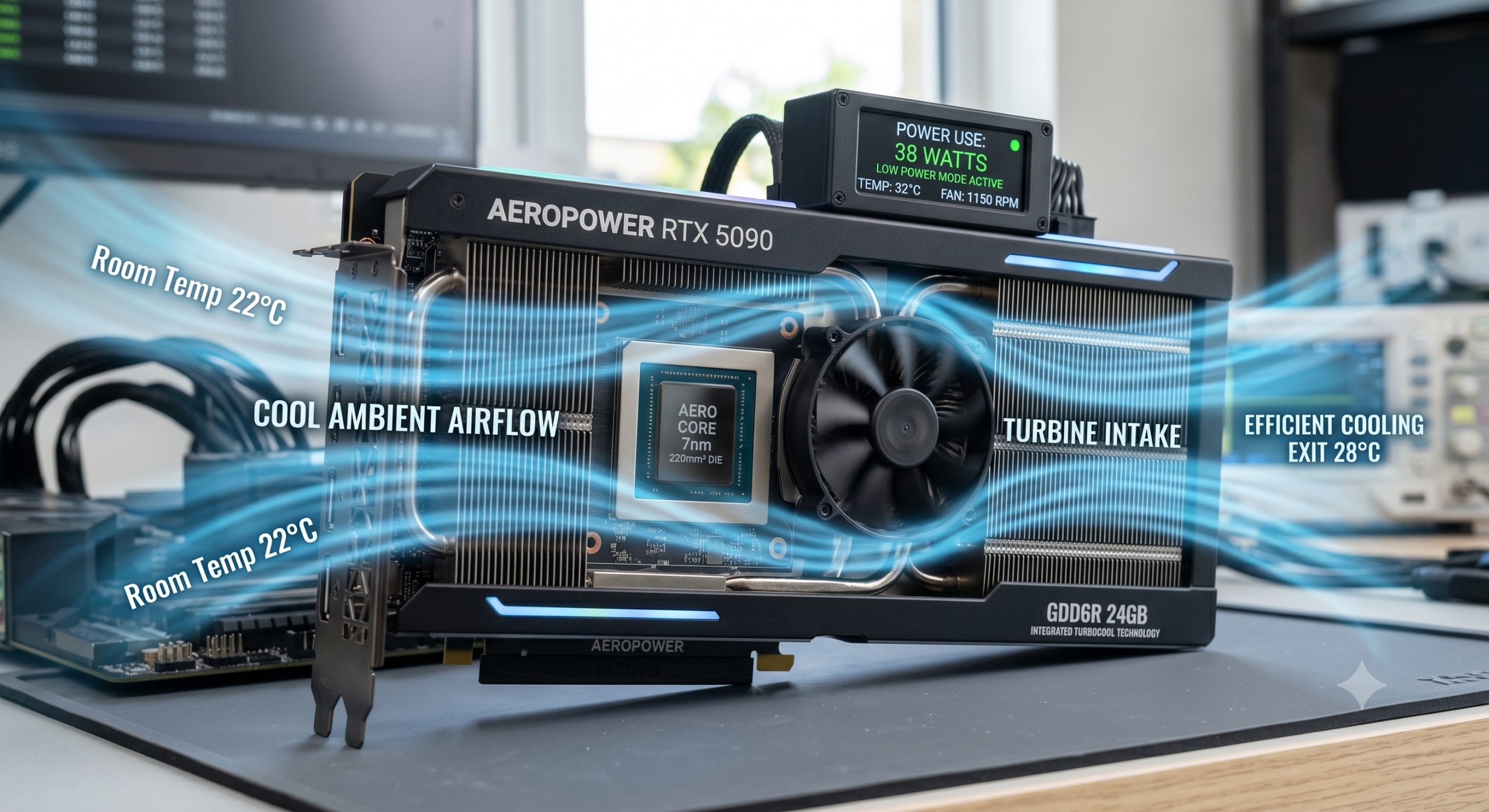
Energy efficient cloud GPUs for machine learning explained. Learn how sustainable, carbon neutral GPU infrastructure reduces cost, boosts performance, and scales AI workloads smarter.
Key Takeaways
- Energy efficient cloud GPUs reduce cost while lowering environmental impact
- Traditional GPU clouds often waste resources due to low utilization
- Sustainable GPU infrastructure focuses on smarter usage, not just more hardware
- Distributed GPU networks improve efficiency by using idle compute
- Carbon-aware and carbon-neutral strategies are becoming essential for AI teams
Machine learning is scaling fast, but the infrastructure behind it is becoming a bottleneck. Training modern models takes serious GPU power, and that power comes with high energy costs. Many teams are paying for compute they are not fully using, especially in traditional cloud setups where capacity is reserved whether it is needed or not.
This inefficiency is starting to show up in real ways. Budgets are getting tighter, training cycles are getting longer, and energy usage is becoming harder to ignore. As models grow, the gap between compute demand and efficient supply continues to widen.
Energy efficient cloud GPUs solve a real problem. Instead of adding more hardware, they focus on using existing resources better. This shift is not just about sustainability. It is about cost, performance, and long-term scalability. By improving utilization and reducing idle time, teams can get more output from the same level of infrastructure.
A growing part of this shift is the move toward distributed GPU networks. Rather than relying only on large centralized data centers, these systems pull together GPU resources from different locations and make them available on demand. This approach reduces waste and opens up access to underused compute.
Platforms like CapaCloud are built around this idea. Instead of investing heavily in new infrastructure, they connect available GPU resources into a unified marketplace, allowing teams to access compute when they need it without paying for idle capacity. This model not only improves efficiency but also supports a more sustainable way to scale machine learning workloads.
What Are Energy Efficient Cloud GPUs
Energy efficient cloud GPUs are cloud-based GPU systems designed to deliver high performance with lower energy consumption. The key difference is not just hardware. It is how the infrastructure is managed.
Traditional GPU clouds often allocate fixed capacity. If you reserve a GPU, you pay for it whether it is fully used or not. Energy efficient systems take a different approach. They focus on:
- High utilization rates
- Dynamic allocation of resources
- Minimizing idle compute
This often involves distributed infrastructure, where GPUs from different locations are pooled together and used on demand.
Why Energy Efficiency Matters in Machine Learning
Machine learning workloads are getting heavier. Training large models can run for days and consume massive amounts of electricity. Even inference at scale adds up quickly.
This creates three practical challenges:
- Rising costs as GPU demand increases
- Environmental impact from energy-heavy workloads
- Scaling limits in traditional cloud setups
At the same time, companies are under pressure to reduce emissions. Efficiency is no longer optional. It directly affects both budget and reputation.
Connect directly to your solution
The energy impact of AI infrastructure is no longer theoretical. It is measurable.
- Data centers account for about 1 to 2 percent of global electricity use
- GPU utilization in traditional cloud environments can fall below 40 percent in some cases
- Training large models can consume megawatt-hours of electricity
These numbers highlight a simple truth. Waste is common, and efficiency is a major opportunity.
How Efficiency Is Measured in GPU Clouds
Energy efficiency is not just a claim. It can be measured using clear metrics.
- Performance per watt: How much compute output you get for each unit of energy consumed
- GPU utilization rate: The percentage of time a GPU is actively doing useful work
- Idle vs active power usage: GPUs still consume power even when idle. Reducing idle time improves efficiency
- Energy proportional computing: Systems that scale power usage based on workload demand
Platforms that optimize these factors deliver more value with less energy.
Sustainable and Carbon Neutral GPU Infrastructure
Sustainability in GPU computing goes beyond reducing power usage. It also includes how energy is sourced and managed.
Carbon-aware computing
Workloads are scheduled when cleaner energy is available. This reduces emissions without changing the workload itself
Carbon-neutral computing
Emissions are balanced using offsets or renewable energy credits
Other practical strategies include:
- Using renewable-powered regions
- Improving cooling efficiency
- Reducing redundant computation
It is important to understand the difference between real reduction and offsetting. The most effective systems focus on reducing energy use first.
How Energy Efficient Cloud GPUs Work
Energy efficient GPU systems rely on better orchestration rather than more hardware. Here is a simplified flow:
- Job submission: A user submits a machine learning task
- Resource matching: The system identifies available GPUs based on performance and location
- GPU allocation: Resources are assigned dynamically instead of being reserved long term
- Execution: The workload runs using optimized scheduling
- Result validation: Outputs are verified for accuracy and reliability
Advanced systems also use:
- Batch scheduling for non-urgent workloads
- Real-time scheduling for latency-sensitive tasks
- Spot pricing models to improve utilization
Distributed GPU Efficiency in Practice
Platforms like CapaCloud use a distributed model to improve efficiency.
Instead of building new data centers, they aggregate GPU resources from different providers. This allows idle GPUs to be used productively rather than sitting unused.
This approach leads to:
- Better overall utilization
- Lower infrastructure waste
- Flexible scaling without heavy capital investment
It is a practical way to increase efficiency without sacrificing performance.
Key Benefits of Energy Efficient Cloud GPUs
- Lower costs: You pay for actual usage instead of reserved capacity
- Reduced carbon footprint: Less wasted compute means less wasted energy
- Better scalability: Distributed systems scale more easily without large upfront investment
- Higher efficiency: More work is completed per unit of energy
- Improved accessibility: Startups and smaller teams can access powerful compute resources
Use Cases in Machine Learning
Energy efficient cloud GPUs support a wide range of workloads:
- Model training: Large models can be trained more cost-effectively
- Inference at scale: Serving models becomes more sustainable over time
- Simulation and rendering: Compute-heavy tasks benefit from flexible scaling
- Research and experimentation: Teams can iterate faster without excessive cost
Centralized vs Distributed GPU Clouds
| Feature | Centralized GPU Cloud | Distributed GPU Cloud |
| Infrastructure | Large data centers | Network of distributed nodes |
| Utilization | Often underused | Higher utilization rates |
| Pricing | Fixed or reserved | Flexible and usage-based |
| Scalability | Capacity limited | Elastic and dynamic |
| Sustainability | Secondary focus | Built into the model |
Traditional hyperscale clouds often require reserved capacity. This leads to over-provisioning and wasted resources. Distributed systems aim to solve that problem.
How to Choose an Energy Efficient Cloud GPU Provider
Choosing the right provider requires more than comparing hourly rates. The real difference shows up in how efficiently the platform uses resources, how transparent it is about energy consumption, and how well it supports your workloads over time.
Utilization efficiency
Look for platforms that actively maximize GPU usage. High utilization means you are getting more actual compute for what you pay. Ask whether the provider uses dynamic scheduling, workload batching, or shared resource pools to reduce idle time. Low utilization is one of the biggest hidden costs in traditional cloud environments.
Pricing model
Flexible pricing is essential. Providers that offer on-demand, spot, or usage-based pricing help you avoid paying for unused capacity. Fixed or reserved pricing models can lead to waste, especially if your workloads are variable. The goal is to match cost directly to usage.
Energy transparency
A strong provider should give visibility into how energy is consumed and where it comes from. This includes insights into power usage, carbon impact, and whether workloads are running on renewable energy sources. Transparency is important not just for sustainability, but also for reporting and compliance.
Geographic distribution
A widely distributed network of GPUs can improve both performance and efficiency. It allows workloads to run closer to users or in regions with lower energy costs or cleaner energy sources. Distributed systems can also tap into underutilized resources that would otherwise go unused.
Reliability and SLAs
Efficiency should not come at the cost of reliability. Look for providers that offer strong service level agreements, consistent uptime, and predictable performance. This is especially important for production workloads where downtime or variability can be costly.
Workload compatibility
Not all platforms handle every type of workload equally well. Make sure the provider supports your frameworks, libraries, and use cases, whether that is training large models, running inference, or handling batch jobs. Compatibility reduces friction and improves overall efficiency.
Security and verification
In distributed environments, security becomes even more important. Check for features like encrypted data handling, isolated execution environments, and result verification mechanisms. These ensure your workloads are both safe and accurate.
Scalability and elasticity
Your needs will grow over time. Choose a provider that can scale with you without requiring long-term commitments or large upfront costs. Elastic systems allow you to increase or decrease usage as needed, which directly improves efficiency.
Carbon Reduction Strategies in GPU Clouds
There are several ways GPU platforms reduce environmental impact:
Carbon-aware scheduling
Running workloads when cleaner energy is available
Renewable energy usage
Powering infrastructure with solar, wind, or other sources
Offsetting
Balancing emissions through external programs
The most effective approach combines all three, with a focus on reducing actual energy use first.
Common Misconceptions About Energy Efficient GPU Clouds
Distributed GPUs are unreliable
Modern systems use validation and redundancy to ensure reliability
Efficiency reduces performance
Better utilization often improves performance per watt
Sustainable solutions are more expensive
In many cases, efficiency reduces overall cost
Challenges and Limitations
Energy efficient systems still face real challenges:
Performance variability
Distributed nodes may differ in quality
Latency concerns
Some workloads require tight synchronization
Trust and verification
Ensuring accurate results across nodes is critical
Adoption barriers
Many teams are still used to traditional cloud models
Future of Sustainable GPU Computing
The demand for efficient infrastructure will continue to grow. AI workloads are expanding, and energy constraints are becoming more visible.
Key trends include:
- Growth of distributed compute marketplaces
- Increased demand for carbon transparency
- Smarter workload scheduling based on energy availability
- Stronger regulatory pressure on emissions
Efficiency will become a standard requirement, not a feature.
FAQs
What are energy efficient cloud GPUs
Energy efficient cloud GPUs are GPU-based computing resources designed to maximize performance while minimizing energy consumption and waste. Instead of relying on fixed, always-on infrastructure, these systems use smarter allocation, higher utilization, and optimized scheduling to ensure GPUs are actively doing useful work. This approach reduces idle time, lowers operating costs, and improves overall efficiency without sacrificing performance.
What is GPU utilization rate
GPU utilization rate measures how much of a GPU’s processing capacity is being actively used over time. A high utilization rate means the GPU is consistently performing useful tasks, while a low rate indicates idle or underused capacity. In traditional cloud environments, utilization can drop significantly due to over-provisioning. Improving utilization is one of the most effective ways to reduce both cost and energy consumption.
Are distributed GPU clouds secure
Distributed GPU clouds can be secure when built with the right safeguards. Modern platforms use multiple layers of protection, including encrypted data transfer, isolated execution environments, and result verification mechanisms. Some systems also use redundancy, where tasks are executed more than once to ensure accuracy. When implemented properly, distributed models can offer strong security while still maintaining flexibility and efficiency.
Can energy efficient GPUs handle large models
Yes, energy efficient GPU systems are fully capable of handling large-scale machine learning workloads. They support both training and inference for complex models, including large language models and computer vision systems. In many cases, distributed infrastructure can even improve scalability by allowing workloads to be split across multiple GPUs, making it easier to handle large datasets and compute-heavy tasks.
How does pricing compare to traditional cloud providers
Energy efficient GPU platforms typically offer more flexible pricing compared to traditional cloud providers. Instead of paying for reserved capacity, users are charged based on actual usage. This reduces waste and makes costs more predictable. Some platforms also offer dynamic pricing models, such as spot or on-demand compute, which can further lower expenses for non-urgent workloads.
What is carbon neutral GPU computing
Carbon neutral GPU computing refers to running workloads in a way that results in net-zero carbon emissions. This is usually achieved by combining energy efficiency with renewable energy sources and carbon offset programs. While offsets can balance emissions, the most effective approach focuses on reducing actual energy consumption first, then offsetting what remains.
Conclusion
Energy efficient cloud GPUs are changing how machine learning infrastructure is built. The focus is shifting from raw power to smarter, more sustainable systems that prioritize utilization, flexibility, and real-world efficiency.
This approach delivers clear benefits. Teams can reduce costs by avoiding unused capacity, scale workloads without heavy upfront investment, and lower the environmental impact of their compute usage. Instead of continuously expanding data center capacity, the industry is starting to rethink how existing resources are used.
Platforms like CapaCloud highlight what this shift looks like in practice. By connecting distributed GPU resources into a single accessible network, they make it possible to tap into underutilized compute rather than letting it sit idle. This model helps improve overall efficiency while giving teams more flexible access to GPU power when they need it.
As AI continues to grow, efficiency will move from being an advantage to being a requirement. Teams that prioritize smarter infrastructure choices early will be in a stronger position to scale, control costs, and operate more sustainably without compromising performance.