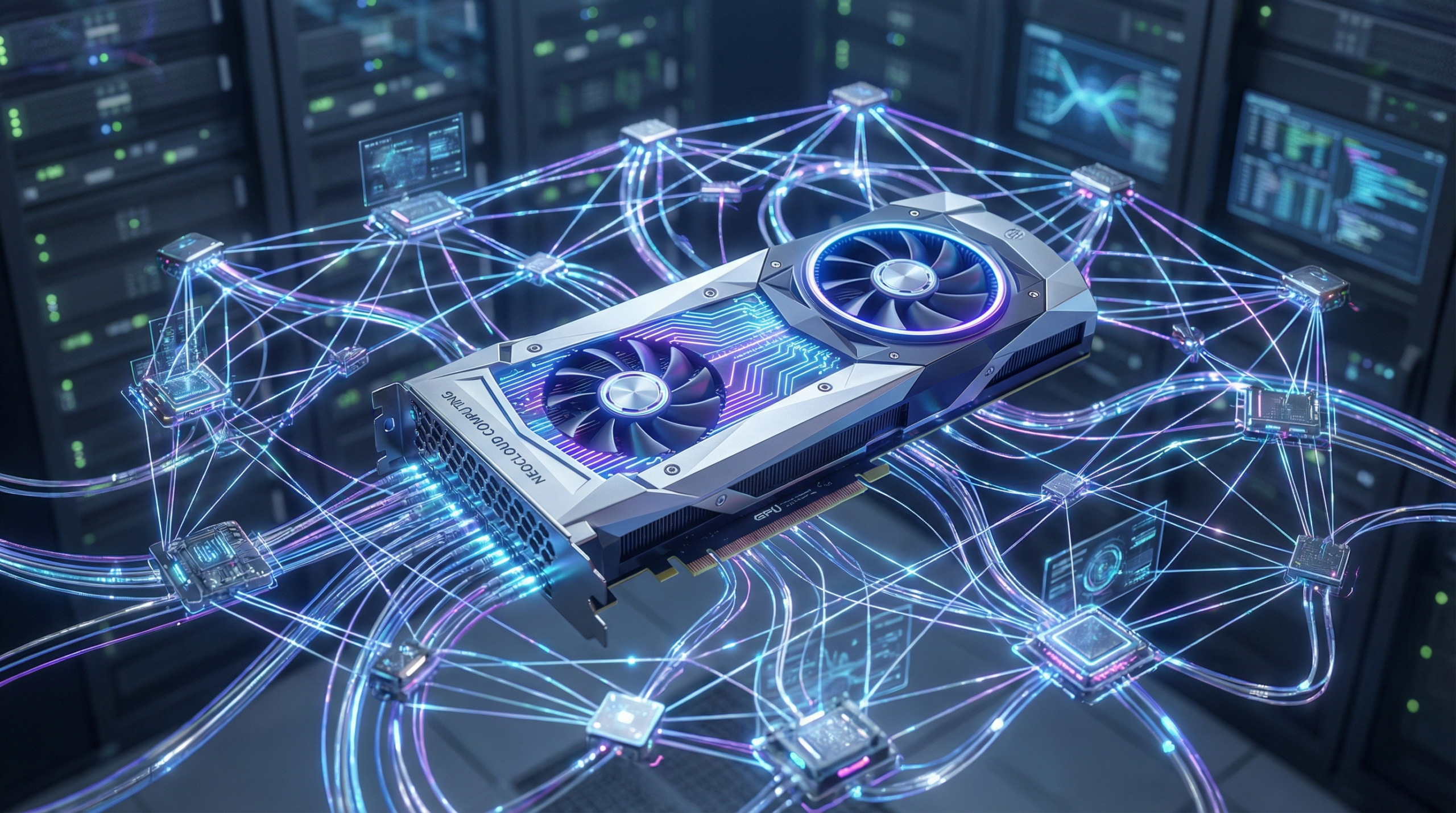
Discover the best 4 decentralized GPU platforms for AI, rendering, and scalable compute. Learn how neocloud computing works and why CapaCloud is leading the shift to faster, more affordable GPU access.
Key Takeaways
- Decentralized GPU platforms are transforming how compute power is accessed by replacing centralized cloud providers with global, peer-to-peer GPU marketplaces.
- Neocloud computing enables more flexible, scalable, and cost-efficient infrastructure, making high-performance compute accessible to startups, developers, and researchers worldwide.
- Decentralized cloud GPU solutions can significantly reduce costs while improving availability, especially for AI training, rendering, and large-scale workloads.
- Choosing the best decentralized GPU platform depends on your use case, including hardware needs, pricing model, and ease of deployment.
- Platforms like CapaCloud, Akash Network, and Render Network are leading the shift toward decentralized compute infrastructure.
The demand for GPU power has exploded. AI models are getting larger, rendering workloads are more complex, and traditional cloud providers are struggling to keep up. Prices have increased, availability has tightened, and access is often limited to well-funded teams.
This is where the decentralized GPU platform enters the picture.
A decentralized GPU platform is not just a cheaper alternative. It represents a complete shift in how compute infrastructure is accessed, distributed, and monetized. Instead of relying on a handful of centralized providers, users tap into a global network of GPUs contributed by individuals and organizations.
This shift is part of a broader movement known as neocloud computing.
What is a Decentralized GPU Platform?
A decentralized GPU platform is a marketplace for compute power. It connects GPU owners with users who need processing power for tasks like machine learning, rendering, or simulations.
In a traditional setup, cloud providers operate massive data centers. Users rent GPUs from these providers at fixed rates. The provider controls pricing, availability, and access.
In a decentralized model:
- GPU owners list their hardware on a network
- Users rent GPUs directly from this distributed pool
- Pricing is determined by supply and demand
- Transactions are often handled through blockchain-based systems
Think of it like a ride-sharing network, but for compute power. Instead of cars, the network distributes GPUs across the world.
This structure removes the dependency on centralized infrastructure and opens access to anyone with internet connectivity.
Centralized vs Decentralized GPU Platforms
Here’s how centralized and decentralized GPU solutions compare:
| Feature | Centralized Cloud | Decentralized GPU Platform |
| Ownership | Single provider | Distributed contributors |
| Pricing | Fixed and premium | Market-driven |
| Availability | Limited during peak demand | Global resource pool |
| Flexibility | Restricted configurations | Wide range of options |
| Failure Risk | Single point of failure | Distributed resilience |
Why Decentralization Matters for GPU Resources
The centralized model worked when demand was predictable. That is no longer the case.
AI startups, research labs, and even solo developers are competing for the same GPU resources. This has created a supply bottleneck that centralized providers cannot easily solve.
A decentralized GPU platform addresses this in several ways.
- Lower Costs: Without the overhead of maintaining massive data centers, decentralized cloud GPU solutions can offer significantly lower pricing. In many cases, workloads can run at a fraction of the cost compared to traditional providers.
- Better Access: Anyone can access GPU power without waiting for availability in a specific region. This is especially important for developers in underserved markets.
- No Vendor Lock-In: Users are not tied to a single ecosystem. They can move workloads freely across different nodes and providers.
- Higher Resource Utilization: Millions of GPUs sit idle across the world. A decentralized GPU platform unlocks that unused capacity and turns it into a productive resource.
- Resilience: If one node fails, workloads can shift to another. The network continues to operate without disruption.
The Rise of Neocloud Computing
Neocloud computing builds on the idea that infrastructure should be open, flexible, and globally distributed.
Instead of renting compute from a single company, users access a network of providers. This creates a more dynamic and scalable system.
Neocloud computing is already reshaping several industries:
- AI development is becoming more accessible
- Rendering pipelines are faster and more cost-efficient
- Scientific research can scale without massive upfront investment
The shift is similar to what happened with cloud computing years ago. The difference is that this time, the infrastructure is not owned by a single entity. It is shared across a network.
How to Choose the Best Decentralized GPU Platform for Your Needs
Not all platforms are built the same. Choosing the best decentralized GPU platform depends on your specific use case.
Evaluating Performance and Hardware Specifications
The first step is understanding your workload.
For AI training:
- High VRAM GPUs like A100 or H100 are preferred
- Multi-GPU support is important
- Stable performance matters
For rendering:
- High clock speeds and efficient architecture are key
- GPU type may vary depending on software
For general compute:
- Flexibility and cost efficiency may be more important than top-tier hardware
You should also evaluate:
- Node reliability
- Network latency
- Storage and bandwidth
A platform that offers a wide range of hardware options gives you more control.
Understanding Pricing Models and Tokenomics
Pricing varies across decentralized cloud GPU solutions.
Common models include:
- Pay per hour
- Pay per minute
- Spot pricing
- Subscription-based access
Some platforms use tokens for transactions and incentives.
This can introduce:
- Lower fees in some cases
- Rewards for providers
- Governance participation
At the same time, token-based systems can be volatile. It is important to understand how pricing works before committing to a platform.
Look for:
- Transparent pricing
- Predictable costs
- Clear billing structure
Community Support, Documentation, and Ease of Use
Ease of use can make or break your experience.
A strong platform should provide:
- Clear documentation
- Simple deployment workflows
- API access
- Active community support
If you spend more time figuring out how to use the platform than running workloads, it becomes a problem.
Look for platforms that prioritize user experience alongside performance.
Decision Checklist
Use this quick framework:
- Need high-performance AI training: choose a platform with enterprise-grade GPUs and stable clusters
- Need affordable rendering: choose a platform optimized for distributed rendering workloads
- Need flexibility and experimentation: choose a platform with a wide range of GPU options
- New to decentralized systems: choose a platform with simple onboarding and strong documentation
Top Decentralized GPU Platforms to Watch in 2026
Several platforms are leading the shift toward decentralized infrastructure. Each one approaches the problem differently.
CapaCloud
CapaCloud positions itself as a modern decentralized GPU platform designed for performance, accessibility, and flexibility.
Key strengths:
- Clean and user-friendly interface
- Competitive pricing compared to traditional cloud providers
- Wide range of GPU options
- Focus on AI workloads and scalable compute
Use cases:
- Machine learning training
- Model inference
- High-performance compute tasks
What makes it stand out is its balance between usability and performance. Many decentralized platforms struggle with complexity. CapaCloud focuses on making GPU access simple without sacrificing power.
For developers looking for a practical entry point into neocloud computing, this platform offers a strong starting point.
Akash Network
Akash Network is one of the earliest players in decentralized cloud infrastructure.
Key strengths:
- Open marketplace model
- Strong community
- Flexible deployment options
Use cases:
- Containerized applications
- General cloud workloads
- Experimental AI deployments
Challenges:
- Steeper learning curve
- Less polished user experience compared to newer platforms
Akash is ideal for developers who are comfortable working with decentralized systems and want maximum flexibility.
Render Network
Render Network focuses on distributed rendering.
Key strengths:
- Optimized for rendering workloads
- Strong adoption among creatives
- Efficient job distribution
Use cases:
- 3D rendering
- Visual effects
- Animation
Limitations:
- Less focus on AI training
- More niche compared to general-purpose platforms
Render Network shows how decentralized cloud GPU solutions can specialize and dominate specific use cases.
io.net
io.net is an emerging player focused on AI infrastructure.
Key strengths:
- Built specifically for AI workloads
- Aggregates GPUs for large-scale training
- Focus on performance and scalability
Use cases:
- Large model training
- Distributed AI workloads
As AI demand grows, platforms like io.net are likely to play a significant role in the future of neocloud computing.
Top Decentralized Platforms Comparison
| Platform | Best For | Ease of Use | Strength | Limitation |
| CapaCloud | AI and general compute | High | Balanced performance and usability | Newer ecosystem |
| Akash Network | Flexible deployments | Medium | Open marketplace | Complexity |
| Render Network | Rendering | High | Specialized performance | Limited AI focus |
| io.net | AI training | Medium | Scalable AI infrastructure | Still evolving |
Challenges and Future Outlook for Decentralized GPU Computing
The growth of decentralized GPU platforms is promising, but challenges remain.
- Latency and Performance Variability: Distributed systems can introduce latency, especially when nodes are geographically distant. This can impact real-time workloads.
- Regulation: As blockchain elements are involved, regulations are still evolving. This creates uncertainty for some users.
- Adoption Barriers: Many organizations are still comfortable with traditional providers. Shifting to a decentralized GPU platform requires a mindset change.
- User Experience: Some platforms still lack the simplicity of centralized cloud services.
What the Future Holds for Neocloud Computing
Despite these challenges, the trajectory is clear.
Demand for GPU power continues to rise:
- AI models are becoming larger
- Real-time applications are increasing
- Compute-intensive workloads are expanding
Centralized providers are struggling to scale fast enough. This creates an opportunity for decentralized cloud GPU solutions.
Neocloud computing is expected to power:
- Next-generation AI systems
- Real-time virtual environments
- Decentralized applications
- Scientific breakthroughs
As infrastructure improves and platforms mature, decentralized GPU platforms will move from alternative to default.
FAQ
What is a decentralized GPU platform?
A decentralized GPU platform is a distributed network where users can rent GPU power from global providers instead of relying on a centralized cloud company.
Is a decentralized GPU platform cheaper than AWS?
In many cases, yes. Decentralized cloud GPU solutions often provide lower pricing due to reduced overhead and market-driven competition.
What is neocloud computing?
Neocloud computing is a model of cloud infrastructure that relies on decentralized networks instead of centralized data centers.
Which is the best decentralized GPU platform?
The best decentralized GPU platform depends on your needs. Platforms like CapaCloud, Akash Network, Render Network, and io.net each serve different use cases.
Final Thoughts On Decentralized GPU Platform
The shift to decentralized GPU platforms is already happening. Rising costs and limited access in traditional cloud systems are pushing developers toward more flexible alternatives.
Neocloud computing offers a better model with global access, lower costs, and scalable compute on demand. As the technology matures, it will become the default choice for AI and high-performance workloads.
The opportunity is here. The advantage goes to those who adopt it early.
