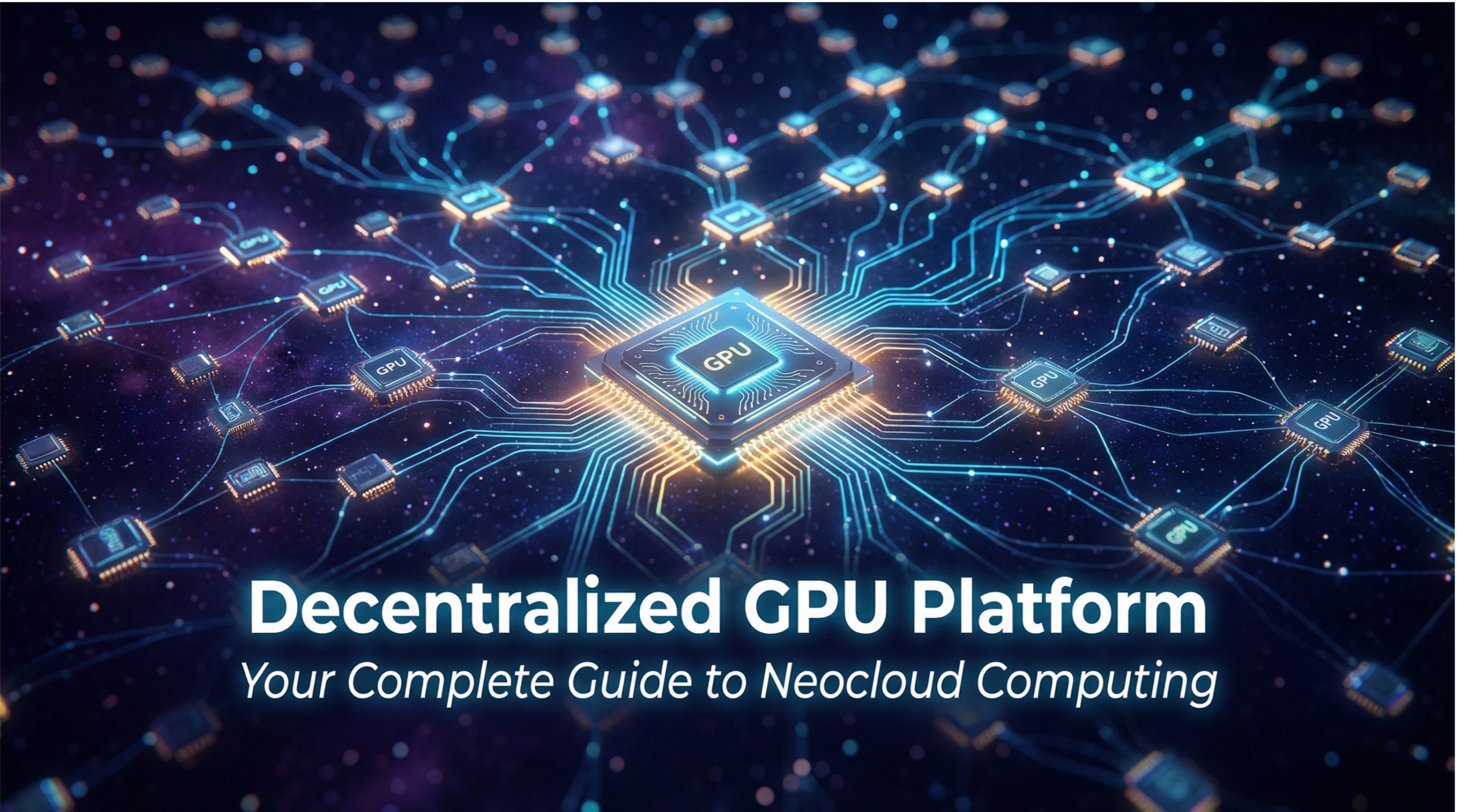
Discover the best decentralized GPU platform options for AI, rendering, and machine learning. Learn how decentralized cloud GPU solutions are shaping the future of neocloud computing.
High-performance GPUs have become the backbone of modern computing.
From training AI models to rendering blockbuster-level 3D graphics, GPUs now power everything from research labs to small startups building the next generation of apps.
But there’s a problem.
Accessing powerful GPUs through traditional cloud providers is often expensive, limited, and frustratingly slow during periods of high demand. Developers frequently find themselves waiting for GPU availability or paying premium prices for limited compute resources.
That’s where decentralized GPU networks like CapaCloud, come in.
Instead of relying on a handful of massive data centers owned by big tech companies, decentralized GPU networks connect thousands of distributed machines around the world. These networks create a global marketplace where anyone can rent or supply GPU power.
The idea is simple:
Unused GPUs sitting in data centers, offices, and even gaming rigs can be turned into valuable computing resources.
This model is part of a broader movement called neocloud computing, which aims to rethink how cloud infrastructure works by distributing it across open networks rather than centralized providers.
Here, we’ll explore how decentralized GPU platforms work, why they’re gaining attention in 2026, and how to choose the best decentralized GPU platform for your needs.
What Is a Decentralized GPU Platform?
A decentralized GPU platform is essentially a global marketplace for computing power.
Instead of one company owning the infrastructure, the network pulls together GPU resources from many independent providers. These providers might be data centers, AI labs, companies with unused servers, or even individuals with powerful hardware.
When a developer needs GPU power, they simply tap into this distributed network.
Behind the scenes, the platform coordinates:
- job scheduling
- workload distribution
- verification of completed tasks
- payments between users and providers
Many decentralized platforms rely on blockchain-based systems to manage these interactions in a transparent and secure way.
This approach is very different from the traditional cloud model.
With centralized cloud providers, everything runs inside massive data centers owned by a few corporations. While these platforms are powerful, they come with several limitations:
- GPU shortages during peak demand
- high hourly pricing for premium GPUs
- limited flexibility for smaller teams
- heavy dependence on a single provider
Decentralized GPU platforms try to solve these issues by turning the internet itself into a distributed compute network.
Why Decentralization Matters for GPU Resources
The demand for GPUs has skyrocketed thanks to AI, machine learning, and advanced graphics processing.
But supply hasn’t always kept up.
That imbalance has made decentralized infrastructure especially attractive.
Lower Costs
Traditional cloud providers spend billions building and maintaining data centers. Those costs inevitably get passed down to customers.
Decentralized GPU networks work differently.
They tap into hardware that already exists. Many GPUs around the world sit idle for large portions of the day. By connecting these machines into a marketplace, platforms can dramatically reduce infrastructure costs.
For users, that often means more affordable GPU access.
Greater Accessibility
One of the biggest challenges for smaller teams is getting access to powerful GPUs.
Startups and independent developers often struggle to compete with well-funded tech companies for limited compute resources.
Decentralized platforms level the playing field.
Instead of needing a large cloud contract, developers can simply connect to the network and rent the resources they need.
This makes high-performance computing accessible to:
- indie developers
- academic researchers
- small AI startups
- creative studios
Resilience and Reduced Centralization
Centralized infrastructure has a single point of control.
If a major cloud provider experiences outages or restrictions, thousands of users can be affected at once.
Decentralized networks distribute resources across many independent nodes. This architecture improves resilience and reduces dependence on a single provider.
For global developers, that kind of flexibility is increasingly valuable.
The Rise of Neocloud Computing
The term neocloud computing describes the next generation of cloud infrastructure built around decentralized networks.
Rather than relying solely on large centralized providers, neocloud platforms combine distributed computing resources into a unified marketplace.
Think of it as the sharing economy for compute power.
Just as ride-sharing platforms unlocked unused vehicles, decentralized compute platforms unlock unused hardware.
Decentralized GPU platforms are one of the most important building blocks of this emerging ecosystem.
They support workloads across multiple industries, including:
- Artificial intelligence: Training advanced machine learning models requires enormous GPU capacity.
- 3D graphics and rendering: Studios often need temporary rendering farms for complex scenes and visual effects.
- Scientific simulations: Researchers can run simulations that would otherwise require expensive supercomputers.
- Gaming and virtual worlds: Distributed GPU power can support real-time rendering for immersive digital environments.
As AI continues to grow, the role of decentralized GPU infrastructure is only becoming more important.
Key Benefits of Using a Decentralized Cloud GPU Solution
Decentralized cloud GPU solutions aren’t just an interesting concept; they solve real problems developers face every day. Let’s look at the biggest advantages.
Cost-Effectiveness and Accessibility
Perhaps the most obvious benefit is cost.
Running GPU workloads in traditional cloud environments can get expensive very quickly. Training large AI models or rendering complex scenes may require dozens or even hundreds of GPUs running simultaneously.
Decentralized platforms reduce these costs by allowing GPU providers to compete in an open marketplace.
Instead of a fixed price set by a single company, users can choose from a range of available resources at different price points.
For developers and startups, this flexibility can make a huge difference.
It allows them to scale workloads without burning through their budgets.
Improved Security and Data Integrity
At first glance, decentralized networks might seem less secure.
In reality, many of them incorporate strong security mechanisms built around cryptography and distributed verification.
Some networks use task verification systems, where results are validated by multiple nodes to ensure computations were performed correctly.
Others rely on blockchain ledgers to record transactions and compute activity, creating transparent and tamper-resistant logs.
These systems help reduce the risks associated with centralized infrastructure failures.
Massive Scalability
One of the most exciting aspects of decentralized GPU platforms is their potential scale.
Because resources come from many different providers, the network can grow organically as more nodes join.
This means users aren’t limited to the capacity of a single data center.
Instead, they can tap into a global pool of GPUs.
For large workloads like AI model training, that kind of scalability is incredibly valuable.
How to Choose the Best Decentralized GPU Platform
Not all decentralized GPU provuders are created equal.
If you’re considering using one, there are a few key factors worth evaluating.
Hardware Performance and GPU Availability
The most important factor is the hardware available on the network.
Different platforms offer different GPU models.
For demanding workloads, developers often look for GPUs such as:
- NVIDIA A100
- NVIDIA H100
- RTX 4090
- RTX 6000 Ada
Each model provides different performance levels, memory capacity, and energy efficiency.
Large AI models often require GPUs with 24GB to 80GB of VRAM, so it’s important to verify that the platform supports those configurations.
Pricing Structure and Token Systems
Many decentralized GPU platforms operate using marketplace-style pricing.
Users typically pay based on GPU usage, similar to traditional cloud services.
However, some platforms also introduce token-based systems that power the network’s economy.
These tokens may be used to:
- pay for compute resources
- reward GPU providers
- support staking and governance
Understanding the platform’s pricing model helps ensure it aligns with your project’s budget and workflow.
Developer Experience and Community
Technology is only useful if people can actually use it.
Platforms with strong documentation, active developer communities, and clear onboarding processes are often easier to adopt.
Look for platforms that provide:
- detailed tutorials
- SDKs or APIs
- active support forums
A vibrant community can make a big difference when troubleshooting complex workloads.
Top 3 Decentralized GPU Platforms to Watch in 2026
The decentralized GPU space is evolving quickly, with several platforms emerging as leaders.
Here are a few worth paying attention to.
CapaCloud
CapaCloud is an emerging player in decentralized computing, offering a peer-to-peer GPU rental marketplace built for the new era of neocloud computing.
The decentralized GPU network connects developers who need GPU power with individuals or organizations that have unused GPUs available. Instead of relying on centralized data centers, the platform creates a distributed network where compute resources can be rented on demand.
Key features of CapaCloud include:
- Pay-per-use GPU rentals – Developers only pay for the compute time they actually use.
- Full root access – Users can install any frameworks, drivers, or tools required for AI, rendering, or data processing workloads.
- Blockchain-based payments – Smart-contract payments enable secure, automated transactions between GPU providers and renters.
- Wallet-based access – Users can start renting GPUs by connecting a Solana-compatible wallet, eliminating traditional account requirements.
- Efficient infrastructure model – By utilizing existing hardware instead of large centralized data centers, the platform promotes a more sustainable approach to cloud computing.
As demand for AI infrastructure continues to grow, platforms like CapaCloud highlight how decentralized GPU networks could power the next generation of distributed computing.
Render Network
Render Network started as a decentralized rendering platform for digital artists.
Its goal was to connect creators who needed rendering power with GPU providers willing to supply it.
Over time, the platform has grown into a broader distributed compute network.
Artists, animation studios, and designers use it to render complex scenes without maintaining expensive hardware.
The network operates through a token-powered marketplace where GPU providers are rewarded for contributing resources.
Akash Network
Akash Network focuses on decentralized cloud infrastructure.
Instead of specializing only in GPUs, it provides a marketplace for a variety of compute resources.
Developers can deploy applications using containerized environments similar to those used in modern cloud systems.
One of the platform’s main advantages is its open bidding system, where compute providers compete to offer the best prices.
This competitive environment often results in lower costs for users.
Decentralized GPU Network Challenges
While decentralized GPU platforms offer enormous promise, the technology is still evolving. Like any emerging infrastructure model, decentralized networks face several technical, regulatory, and adoption-related challenges.
Understanding these hurdles helps developers and organizations make informed decisions when exploring decentralized cloud GPU solutions.
Network Latency in Distributed Infrastructure
One of the biggest technical challenges with decentralized GPU networks is latency.
Unlike centralized cloud providers that operate tightly controlled data centers, decentralized platforms rely on nodes distributed across different geographic regions. While this global distribution improves resilience and scalability, it can introduce delays when tasks are routed between nodes.
For workloads that require real-time responsiveness, such as interactive rendering or low-latency AI inference, network delays can sometimes impact performance.
Improving routing algorithms, edge computing integration, and optimized node selection are ongoing efforts aimed at reducing these latency challenges.
Data Transfer and Bandwidth Limitations
Another common issue involves data transfer efficiency.
Many GPU workloads—especially those involving machine learning—require large datasets. Moving these datasets between distributed nodes can create bottlenecks if bandwidth is limited.
For example, training a large AI model might involve transferring hundreds of gigabytes or even terabytes of data across the network.
To address this, some decentralized GPU platforms are exploring:
- integrated decentralized storage systems
- data locality optimization
- caching mechanisms near compute nodes
These improvements aim to minimize unnecessary data movement and improve overall performance.
Regulatory and Compliance Uncertainty
Decentralized compute networks often incorporate token-based payment systems or blockchain infrastructure.
While these technologies enable transparent, automated transactions, they also introduce regulatory considerations in some regions.
Governments and regulators are still developing policies around:
- blockchain-based marketplaces
- token economies
- decentralized infrastructure networks
This evolving regulatory environment can create uncertainty for companies that want to adopt decentralized GPU solutions at scale.
Over time, clearer frameworks will likely emerge as decentralized technologies become more widely used.
Enterprise Adoption and Trust
Perhaps the biggest challenge is adoption.
Many organizations have spent years building their infrastructure around traditional cloud providers. These platforms offer enterprise support, well-established tools, and trusted ecosystems.
Switching to decentralized infrastructure requires a shift in mindset.
Enterprises need reassurance that decentralized networks can provide:
- reliable uptime
- predictable performance
- strong security standards
- enterprise-grade support
As decentralized GPU platforms mature, improved tooling, better developer experience, and successful real-world use cases will gradually increase confidence in this new model.
The Future of Neocloud Computing
Despite these challenges, the long-term outlook for decentralized GPU infrastructure is incredibly exciting.
Demand for GPU compute continues to grow at an astonishing pace.
AI development alone is driving a massive need for scalable computing power.
Decentralized networks may help fill that gap by unlocking unused hardware around the world.
Over the next decade, we could see decentralized GPU platforms powering everything from AI research to immersive virtual worlds.
The concept of neocloud computing may eventually reshape how the internet itself is built.
FAQs
What is a decentralized GPU platform?
A decentralized GPU platform is a distributed computing network that allows users to rent GPU power from a global pool of providers instead of relying on centralized cloud data centers. These platforms connect developers who need computing resources with individuals or organizations that have unused GPUs, creating a marketplace for GPU compute.
How does a decentralized cloud GPU solution work?
Decentralized cloud GPU solutions work by distributing workloads across a network of independent GPU providers. When a user requests compute resources, the platform allocates available GPUs from the network to process the task. Payments and task verification are often handled using blockchain-based systems or automated smart contracts.
Why are decentralized GPU platforms becoming popular for AI workloads?
AI development requires massive GPU computing power, which can be expensive and difficult to access through traditional cloud providers. Decentralized GPU platforms provide a more flexible alternative by offering:
- lower compute costs
- scalable GPU availability
- global access to distributed resources
This makes them especially attractive for AI startups, researchers, and independent developers.
Are decentralized GPU networks secure?
Most decentralized GPU platforms implement security mechanisms such as cryptographic verification, blockchain-based transaction records, and distributed task validation. These systems help ensure that computations are executed correctly and that payments between users and GPU providers remain transparent and secure.
What should you look for in the best cloud GPU providers?
When evaluating decentralized GPU providers, consider several key factors:
- GPU hardware availability (such as A100 or H100 GPUs)
- pricing models and payment options
- network reliability and performance
- developer tools and documentation
- community support and ecosystem growth
Choosing the right platform depends on your workload requirements, whether you’re running AI training jobs, rendering tasks, or large-scale data processing.
Can you rent GPUs instead of buying them?
Yes. GPU rental allows developers, researchers, and businesses to access high-performance GPUs on demand without purchasing expensive hardware. Instead of investing thousands of dollars in physical GPUs, users can rent compute power from cloud providers or decentralized GPU platforms and pay only for the time they use.
This model is especially useful for workloads such as:
- AI and machine learning training
- 3D rendering and animation
- video processing
- scientific simulations
Decentralized GPU platforms take this idea even further. They create peer-to-peer marketplaces where people can rent out unused GPUs, making powerful compute resources more widely available.
The result is often better pricing, greater GPU availability, and faster access to compute power compared to traditional cloud providers.
Final Thoughts On Decentralized GPU Platforms
The race for GPU computing power is only getting more intense.
As AI models grow larger and digital experiences become more complex, access to scalable GPU infrastructure will be critical.
Decentralized GPU platforms offer a compelling alternative to traditional cloud systems.
By turning idle hardware into a global compute marketplace, they open the door to more affordable, accessible, and scalable computing.
For developers, researchers, and startups, that shift could unlock entirely new possibilities.
Ready to Explore Decentralized GPU Computing?
If you’re building AI models, rendering complex graphics, or running large-scale data processing workloads, CapaCloud decentralized GPU platform is worth exploring.
The next wave of cloud infrastructure may not live inside a few massive data centers.
It might live everywhere.
Try CapaCloud Today.