Explore how peer-to-peer neocloud is transforming GPU access, cutting costs, and challenging hyperscalers. Learn key differences, real use cases, and when to choose each.
Key takeaways
- Peer-to-peer neocloud unlocks global GPU supply by turning idle machines into usable compute, helping solve the growing shortage driven by AI workloads
- Cost efficiency is a major advantage, with decentralized networks often offering significantly lower pricing through market-driven competition
- Hyperscalers still lead in reliability and enterprise readiness, but they are constrained by centralized infrastructure and rising demand
- Neocloud works best for parallel, compute-heavy tasks like AI training, rendering, and batch processing, while hyperscalers remain better for sensitive or real-time workloads
- The future is hybrid, with decentralized GPU networks complementing traditional cloud rather than replacing it
Cloud computing was built for a different era. Traditional hyperscalers were designed around predictable workloads, steady demand, and centralized control. That model worked well for web apps, storage, and enterprise systems where usage patterns were relatively stable and capacity could be planned in advance.
Over time, these platforms optimized for consistency, reliability, and control. They built massive data centers, standardized infrastructure, and layered on managed services that made it easier for businesses to scale without worrying about hardware. For many years, this approach defined what “the cloud” meant.
AI changed the equation.
Modern AI workloads are fundamentally different. Training models, running inference at scale, and processing large datasets require massive amounts of GPU compute. Demand is no longer steady or predictable. It spikes, scales rapidly, and often needs to be fulfilled immediately. This puts pressure on a system that was not designed for sudden, high-intensity compute needs.
Today, GPU demand is exploding. Access is limited. Pricing is rising. Even well-funded teams struggle to secure the compute they need when they need it. Waiting for capacity, navigating regional shortages, or paying premium prices has become a common experience.
This is not a temporary shortage. It reflects a deeper limitation in how cloud infrastructure is designed. Centralized systems can only scale as fast as new data centers are built, hardware is procured, and supply chains allow. That creates a bottleneck in a world where demand is accelerating faster than infrastructure can keep up.
At the same time, there is a large amount of unused compute sitting idle across the globe. GPUs in personal rigs, enterprise clusters, and smaller data centers often remain underutilized. This gap between unused supply and unmet demand highlights an inefficiency in the current model.
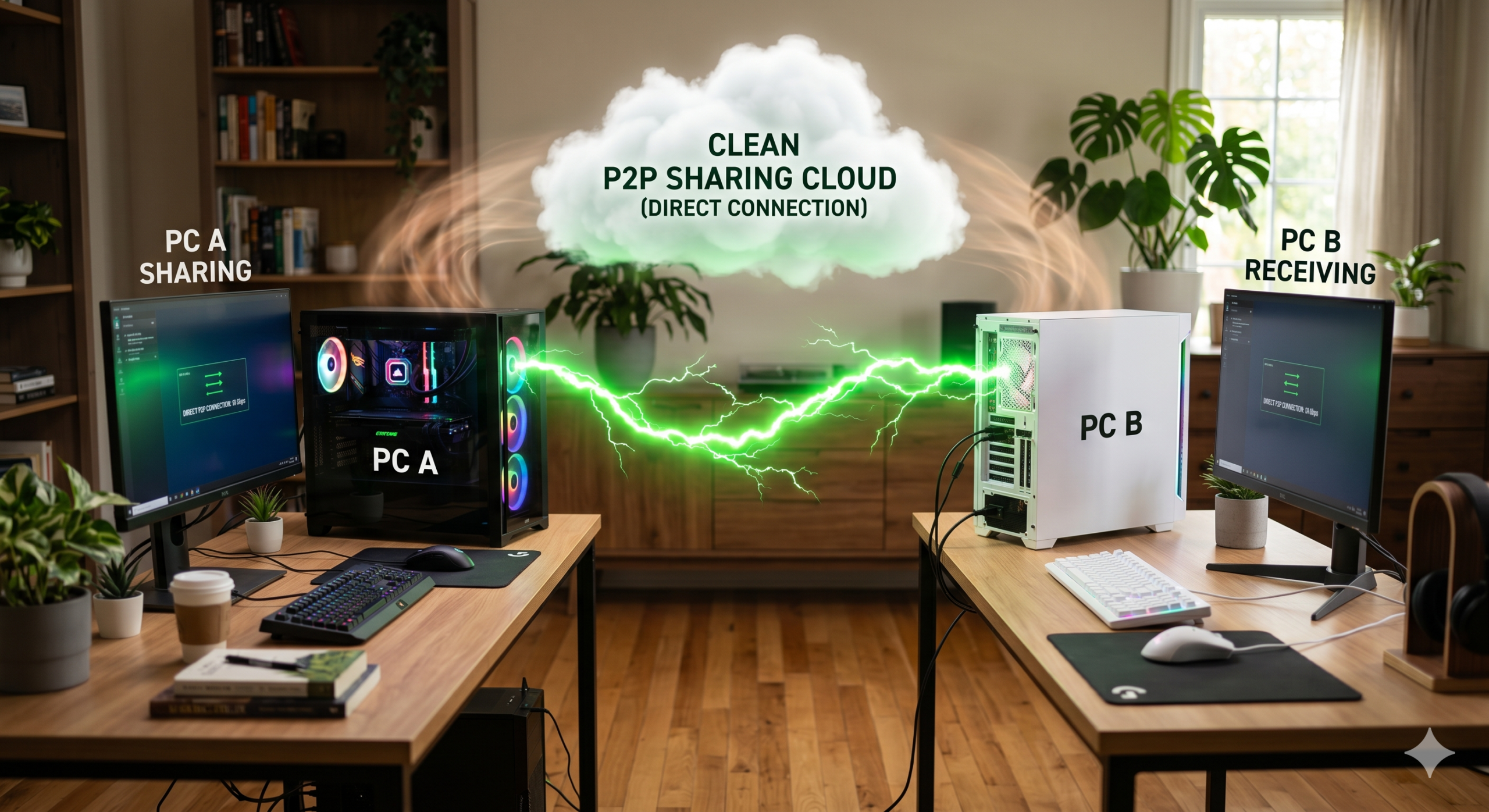
Peer-to-peer neocloud is emerging as a response to that constraint. Instead of relying on a few centralized providers, it distributes compute across a global network of independent GPU owners. It connects those who have unused resources with those who need them, creating a more open and flexible system.
This approach does more than increase supply. It changes how compute is accessed, priced, and scaled. By introducing a market-driven model, it allows pricing to reflect real-time demand and availability. By distributing infrastructure, it reduces reliance on any single provider. And by unlocking idle capacity, it expands the total pool of available compute without waiting for new data centers to be built.
In this new landscape, cloud computing is no longer just about centralized control. It is becoming a network, one where compute can come from anywhere and be accessed by anyone who needs it.
What Is a Peer-to-Peer Neocloud
A peer-to-peer neocloud is a decentralized compute network where individuals and organizations contribute GPU resources that can be rented on demand.
Instead of provisioning instances from a single provider, users tap into a distributed pool of machines located across different regions and operators.
How It Works
- GPU owners connect their machines as nodes
- Developers submit jobs through APIs or dashboards
- The network matches jobs to available GPUs
- Tasks are executed and results are returned
Key Participants
- Node providers who supply GPU power
- Developers and teams who need compute
- Protocols or platforms that coordinate scheduling, pricing, and verification
This model allows unused GPUs to generate value while giving buyers access to a broader and often more affordable supply of compute.
What Are Centralized Hyperscalers
Centralized hyperscalers are cloud providers that own and operate large-scale data centers around the world.
Major players include:
- Amazon Web Services
- Google Cloud
- Microsoft Azure
How They Operate
- Infrastructure is centrally owned and managed
- Users rent virtual machines or managed services
- Pricing is fixed or tiered
- Capacity depends on available hardware in data centers
These platforms offer reliability and a mature ecosystem, but they were not designed for a world where GPU demand grows faster than supply.
Architecture Comparison
Centralized Cloud Architecture
- Built around large data centers
- Controlled by a single provider
- Predictable performance environments
- Capacity scaling tied to infrastructure expansion
Peer-to-Peer Neocloud Architecture
- Distributed across independent nodes globally
- No single controlling entity
- Marketplace-driven allocation of resources
- Scaling happens by adding more participants
The difference comes down to control and flexibility. One concentrates resources. The other distributes them.
Decentralized GPU Cloud
A decentralized GPU cloud aggregates compute power from independent machines into a unified, on-demand network. Instead of relying on a single provider’s data centers, it connects GPUs from individuals, startups, and smaller infrastructure operators around the world.
What makes this model powerful is coordination. On their own, these machines are fragmented and underutilized. When connected through a shared network with scheduling, pricing, and verification layers, they function as a cohesive compute platform that can handle large-scale workloads.
This transforms GPU access from something scarce and centralized into something distributed and more accessible.
Why GPUs Are Critical
Modern workloads such as AI training, inference, and simulation depend heavily on GPUs. These resources are expensive and often sit idle when not in use.
Decentralization unlocks that unused capacity.
Job Lifecycle
- A developer submits a job
- The system evaluates requirements such as GPU type, memory, and location
- Suitable nodes are selected based on availability and pricing
- The job is executed on one or more nodes
- Results are returned and validated
- Payment is released to node providers
Scheduling Models
- Auction-based matching where nodes compete on price
- Priority queues for urgent workloads
- Hybrid models balancing cost and performance
Failure Handling
- Jobs can be checkpointed and resumed
- Failed executions are reassigned
- Redundancy can be used for critical workloads
Verification and Trust
Trust is one of the biggest challenges in decentralized systems. Several mechanisms are used to ensure results are correct.
- Deterministic compute ensures the same input produces the same output
- Redundant execution runs the same job on multiple nodes for comparison
- Fraud proofs allow incorrect results to be challenged and verified
These approaches replace centralized trust with verifiable processes.
Key Differences: Neocloud vs Hyperscalers
| Feature | Peer-to-Peer Neocloud | Hyperscalers |
| Pricing | Market-driven | Fixed or tiered |
| Cost | Often 30 to 70 percent lower depending on demand | Premium pricing |
| Scalability | Expands with global node supply | Limited by data centers |
| Performance | Variable | Consistent |
| Access | Open participation | Account-based |
| Resource Use | Utilizes idle GPUs | Often underutilized capacity |
Use Cases
- A startup training an image generation model distributes workloads across global GPUs instead of waiting for limited hyperscaler capacity
- A rendering studio processes large batches overnight at lower cost using distributed nodes
- A research team runs parallel experiments without being constrained by regional GPU shortages
These are not edge cases. They are becoming common as demand continues to grow.
Benefits of Peer-to-Peer Neocloud
- Lower compute costs through competitive pricing
- Access to a global supply of GPUs
- Reduced dependency on centralized providers
- Built-in resilience from distributed infrastructure
- New revenue streams for GPU owners
Limitations and Challenges
- Node reliability can vary
- Latency depends on geographic distribution
- Verification introduces overhead
- Developer tooling is still evolving
- Regulatory frameworks are still catching up
These challenges are real, but they are actively being addressed as the ecosystem matures.
Developer Experience in Neocloud
Adoption depends heavily on how easy the system is to use.
Modern neocloud platforms are improving developer experience through:
- APIs and SDKs for job submission
- Dashboards for monitoring and control
- Logging and debugging tools
- Integration with machine learning pipelines
The goal is to make decentralized compute feel as seamless as traditional cloud services.
Data and Storage Considerations
Compute is only part of the equation. Data movement plays a major role in performance and cost.
Key considerations include:
- Data transfer latency between nodes
- Storage solutions such as distributed storage networks
- Hybrid models combining centralized storage with decentralized compute
Efficient data handling is critical for large-scale workloads.
Economic Model of Neocloud
Neocloud operates as a marketplace.
How Pricing Works
- Node providers set prices based on supply and demand
- Developers choose based on cost, performance, and availability
- Dynamic pricing adjusts in real time
Node Incentives
- Higher reliability leads to more jobs
- Better hardware attracts higher-paying workloads
- Consistent performance builds reputation
This creates a competitive environment where efficiency is rewarded.
Enterprise Adoption Path
Enterprises are not replacing hyperscalers overnight. Adoption is gradual.
Typical path:
- Start with non-critical workloads
- Use neocloud for cost optimization
- Integrate with existing cloud infrastructure
- Expand usage as confidence grows
This hybrid approach reduces risk while unlocking benefits.
When to Choose Each Model
Choose neocloud if:
- You need cost-efficient GPU compute
- Workloads are parallel and flexible
- You can tolerate some variability
Choose hyperscalers if:
- You require strict reliability and compliance
- Workloads are latency-sensitive
- You depend on managed services
The Neocloud Ecosystem
The neocloud ecosystem is growing quickly, shaped by a mix of infrastructure providers, marketplaces, and developer platforms that make decentralized compute usable in practice. At its core, the ecosystem connects two sides of the market: GPU suppliers and compute buyers.
On one side are individuals, data centers, and organizations with underutilized hardware. On the other are developers, startups, and research teams that need scalable GPU access without the constraints of centralized providers.
Platforms like CapaCloud are building the coordination layer that makes this exchange possible. They provide the tools, protocols, and interfaces that allow distributed resources to function as a single, usable cloud environment.
Common Objections
- Is it reliable: Reliability is improving through redundancy, reputation systems, and better scheduling.
- Is it secure: Encryption and verification mechanisms protect workloads, though the model differs from centralized security.
- Can it replace traditional cloud: Not entirely. It complements it, especially for compute-heavy workloads.
Future of Cloud Computing
The future is hybrid.
Centralized cloud will continue to power core systems and enterprise infrastructure. Decentralized neocloud will handle scalable, compute-intensive workloads.
As AI demand accelerates, distributing compute is becoming less of an experiment and more of a requirement.
Conclusion
Peer-to-peer neocloud is not just another option in the cloud landscape. It represents a fundamental shift in how compute is sourced, priced, and delivered. Instead of relying on a small number of centralized providers, it opens up access to a global pool of underutilized resources and turns them into a coordinated, usable infrastructure layer.
This shift is being driven by necessity. The rapid rise of AI and other compute-intensive workloads has exposed the limits of traditional cloud models. GPU scarcity, rising costs, and access constraints are not short-term issues. They reflect structural bottlenecks in centralized systems that cannot expand fast enough to meet accelerating demand.
At the same time, there is already enough compute capacity in the world. It is just not efficiently connected or accessible. Peer-to-peer neocloud addresses this imbalance by unlocking idle GPUs and making them available through a distributed network. It does not wait for new data centers to be built. It makes better use of what already exists.
Centralized hyperscalers are not going away. They will continue to play a critical role, especially for enterprise systems, regulated workloads, and applications that require consistent performance and tight control. Their infrastructure, tooling, and reliability remain essential.
But they are no longer sufficient on their own.
The pressure created by AI workloads is forcing a more flexible and scalable model to emerge. One that can expand dynamically, adapt to demand in real time, and offer more competitive pricing through open participation.
This is where neocloud fits in.
It complements traditional cloud by handling workloads that benefit from scale, flexibility, and cost efficiency. It introduces a marketplace dynamic to compute. It lowers barriers to access. And it creates new economic opportunities for both developers and infrastructure providers.
What is emerging is not a replacement, but a rebalancing.
Cloud computing is evolving from a fully centralized system into a hybrid model, where centralized and decentralized infrastructure coexist and serve different needs. Over time, this blend will become the norm, with workloads moving between environments based on cost, performance, and requirements.
Neocloud does not replace the cloud. It reshapes it.
And as demand for compute continues to grow, that shift is likely to accelerate.
FAQ
What is a peer-to-peer neocloud
A peer-to-peer neocloud is a decentralized compute network where GPU owners contribute their hardware to a shared system. Developers can rent this distributed compute power on demand instead of relying on centralized cloud providers.
How is neocloud different from traditional cloud computing
Traditional cloud computing relies on centralized data centers owned by a few providers. Neocloud distributes compute across independent nodes globally, using a marketplace model for pricing and resource allocation.
Why is decentralized GPU cloud gaining attention
The rapid growth of AI and machine learning has created a surge in GPU demand. Centralized providers cannot always meet this demand efficiently, leading to high costs and limited availability. Decentralized GPU clouds unlock idle capacity and expand access.
Is neocloud cheaper than hyperscalers
In many cases, yes. Because pricing is market-driven and based on unused global capacity, decentralized networks can offer compute at significantly lower costs, often depending on supply and demand conditions.
Is decentralized compute reliable
Reliability varies by platform, but modern neocloud systems use mechanisms like redundancy, checkpointing, and reputation systems to improve consistency and reduce failure risks.
How are results verified in a decentralized system
Verification methods include deterministic compute, redundant execution across multiple nodes, and fraud proofs. These approaches ensure that results are accurate without relying on a central authority.
Is it secure to run workloads on a decentralized network
Security is handled through encryption, isolated execution environments, and validation layers. While the model differs from centralized cloud security, it is designed to protect both data and computation.
What types of workloads are best suited for neocloud
Neocloud works best for:
- AI training and inference
- Batch processing
- Rendering and simulation
- Large-scale parallel workloads
When should I use hyperscalers instead
Hyperscalers are better suited for:
- Enterprise applications
- Regulated or sensitive workloads
- Real-time systems requiring low latency
- Applications that rely heavily on managed services
Can neocloud replace AWS or other hyperscalers
No. Neocloud is not a full replacement. It complements hyperscalers by handling compute-intensive workloads more efficiently, especially where cost and scalability are priorities.
How do developers interact with a neocloud platform
Most platforms provide APIs, SDKs, and dashboards for submitting jobs, monitoring execution, and managing workloads. The experience is increasingly similar to traditional cloud environments.
What are the main challenges of neocloud
Key challenges include:
- Variability in node performance
- Data transfer and latency considerations
- Maturity of tooling and ecosystem
- Regulatory uncertainty
What is the future of decentralized cloud computing
The future is likely hybrid. Centralized cloud will continue to handle core infrastructure, while decentralized neocloud will support scalable, compute-heavy workloads. Together, they form a more flexible and efficient cloud ecosystem.