Learn how peer-to-peer GPU rentals work, why they are cheaper than traditional cloud, and how platforms like CapaCloud help you access scalable, pay-per-use GPU compute on demand.
Key Takeaways
- Peer-to-peer GPU rentals unlock a global pool of unused compute, making high-performance GPUs more accessible without relying on centralized providers
- The pay-per-use model helps teams avoid wasted spend and can reduce GPU costs by up to 30 to 70 percent
- Decentralized GPU clouds offer greater flexibility, faster scaling, and less vendor lock-in compared to traditional cloud platforms
- Use cases span AI training, rendering, startups, and data-intensive workloads where cost efficiency and scalability matter most
- Platforms like CapaCloud are making it easier to adopt this model with simpler access and competitive pricing
GPU costs are rising fast. And for many teams, access is becoming just as big a problem as price.
If you have tried training AI models or running GPU-heavy workloads on traditional cloud platforms, you have probably run into the same issues. High hourly rates, limited availability, and the need to overpay just to avoid running out of capacity.
But there is another option that is gaining traction.
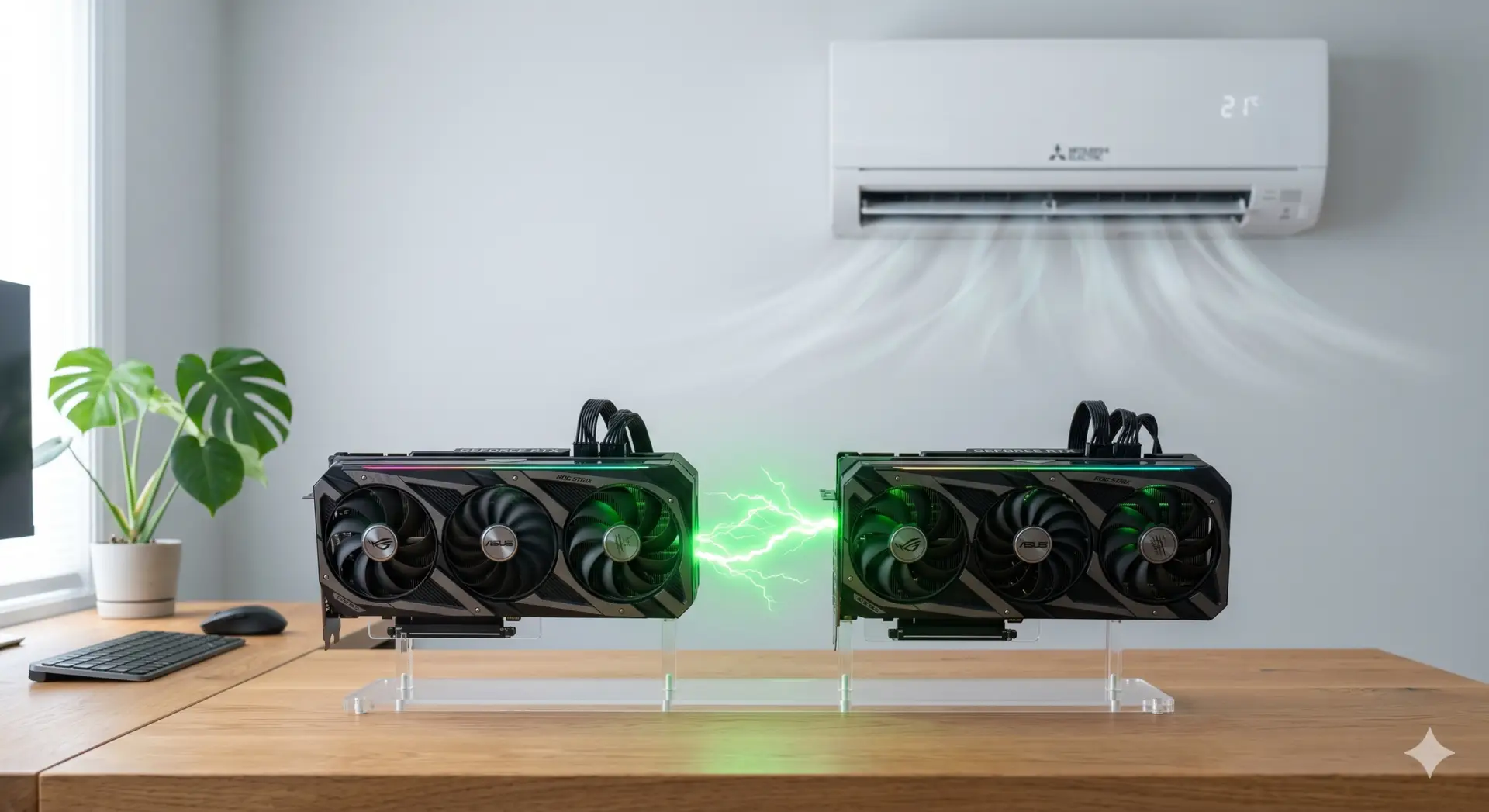
Peer-to-peer GPU rentals take a completely different approach. Instead of relying on centralized data centers, they tap into a global pool of underused GPUs and make them available on demand.
The result is simple. Lower costs, more flexibility, and faster access to compute when you need it.
In this guide, you will learn how peer-to-peer GPU rentals work, what powers the decentralized GPU cloud, and why this model is often significantly cheaper than traditional providers.
What Are Peer-to-Peer GPU Rentals?
Peer-to-peer GPU rentals are a marketplace model where people and organizations rent out unused GPU power to others.
Instead of one company owning all the infrastructure, supply comes from thousands of independent providers across the world.
That includes:
- Individuals with high-end GPUs
- Data centers with idle capacity
- Companies with underutilized hardware
What Makes Peer-to-Peer GPU Rentals Different
Traditional cloud platforms operate centralized data centers. You rent from them at fixed prices.
Peer-to-peer networks work differently. You rent from a distributed network where pricing and availability are shaped by supply and demand.
At its core, this model unlocks something that has always existed but was never accessible. Idle GPU power.
How Peer-to-Peer GPU Rentals Work
At a high level, peer-to-peer GPU rentals function like a marketplace for compute. But under the hood, several layers work together to make the experience feel seamless, even though the infrastructure is distributed across the globe.
GPU Providers List Available Compute
The process starts with supply.
Individuals, data centers, and organizations connect their machines to a platform such as CapaCloud and list their available GPUs.
Each listing typically includes:
- GPU type and performance specs
- Price per hour
- Location and network speed
- Availability and uptime history
This creates a live inventory of compute resources that users can access at any time.
Users Request and Match with GPUs
Users submit workloads based on their needs, whether for AI training, rendering, or data processing.
The platform then matches them with suitable GPUs based on:
- Budget
- Performance requirements
- Availability
Workloads Are Deployed and Executed
Once matched, the system sets up the environment and runs the workload.
This typically involves:
- Spinning up a container or virtual machine
- Allocating GPU resources
- Executing tasks across distributed nodes
From the user’s perspective, it feels similar to launching a cloud instance.
Pay-Per-Use Billing and Quality Control
Users are billed based on actual usage through a pay-per-use GPU rental model.
At the same time, platforms maintain quality through:
- Provider rating systems
- Performance monitoring
- Security measures like isolation and encryption
This ensures efficient, reliable, and cost-effective access to GPU compute.
What Is a Decentralized GPU Cloud?
A decentralized GPU cloud is the system that makes peer-to-peer rentals possible at scale.
Instead of relying on a few large data centers, it distributes compute across a global network.
Key Differences Between Traditional Cloud and Decentralized GPU Cloud
| Feature | Traditional Cloud | Decentralized GPU Cloud |
| Infrastructure | Centralized | Distributed |
| Pricing | Fixed and premium | Market-driven |
| Flexibility | Limited | On-demand |
| Access | Controlled | Open marketplace |
Peer-to-peer rentals are the mechanism. The decentralized GPU cloud is the infrastructure layer behind it.
Why Peer-to-Peer GPU Rentals Are Cheaper
The cost advantage is not just a small optimization. It comes from how the entire system is structured. Instead of building new infrastructure and charging premium rates, peer-to-peer models make better use of what already exists.
No Expensive Data Center Overhead
Traditional cloud providers invest heavily in building and maintaining massive data centers. This includes:
- Physical infrastructure and hardware
- Cooling systems and power consumption
- Staffing, maintenance, and global operations
All of these costs are baked into what you pay per hour.
Peer-to-peer networks remove most of that burden. Since the infrastructure is already owned and distributed across providers, there is far less overhead to recover. That is a big reason prices can be lower.
Idle GPUs Become Active Supply
A huge amount of GPU power sits unused at any given time. Gaming rigs, enterprise machines, and even data centers often have idle capacity.
Peer-to-peer platforms unlock that unused compute and bring it into the market.
When that happens:
- The total supply of GPUs increases
- More providers compete for the same workloads
- Prices naturally move downward
Instead of scarcity driving prices up, abundance helps push them down.
Competitive Pricing Environment
In traditional cloud, pricing is controlled by a few large providers.
In peer-to-peer systems, pricing is shaped by the marketplace.
Multiple providers list similar GPUs, and users can choose based on:
- Price
- Performance
- Reliability
This competition creates a more efficient market where providers are incentivized to offer better rates to attract jobs. Over time, this keeps pricing more competitive than centralized alternatives.
Pay-Per-Use Efficiency
With pay-per-use GPU rental, you are billed only for the compute you actually use.
That means:
- No paying for idle instances
- No need to reserve capacity in advance
- No overestimating your needs just to be safe
In traditional environments, teams often overprovision to avoid running out of resources, which leads to wasted spend.
Peer-to-peer models eliminate that inefficiency. You spin up resources when needed and shut them down when the job is done.
Peer-to-Peer GPU Rentals Cost Comparison Example
To make this more concrete, here is a simplified comparison:
- Traditional cloud (A100 GPU): around $2 to $4 per hour
- Peer-to-peer marketplaces: around $0.80 to $2 per hour
That can translate to savings of 30 to 70 percent, depending on the workload and availability.
For teams running long training jobs, that difference adds up quickly.
Peer-to-Peer GPU Rentals vs Traditional Cloud Providers
- Cost: Traditional cloud platforms tend to charge premium rates. Peer-to-peer options are often significantly cheaper.
- Flexibility: With traditional providers, you often need to choose predefined instances. Peer-to-peer allows more dynamic selection.
- Availability: During high demand, GPUs can be hard to get on centralized platforms. Peer-to-peer networks pull from a global pool.
- Vendor Lock-In: Switching between traditional providers can be difficult. Peer-to-peer marketplaces are more open and flexible.
When Should You Switch to Peer-to-Peer GPU Rentals?
This model is not just an alternative. For many teams, it is the better option.
You should consider switching if:
- You are spending heavily on GPU workloads each month
- You need flexible scaling without long-term commitments
- You run experiments or workloads that do not require reserved infrastructure
- You want to reduce infrastructure costs without sacrificing performance
For startups and growing teams, the cost savings alone can justify the switch.
Peer-to-Peer GPU Rentals Use Cases
- AI and Machine Learning: Train models, fine-tune systems, and run experiments without high infrastructure costs.
- Rendering and Creative Work: 3D rendering, animation, and video processing become more affordable.
- Startups and Developers: Access powerful GPUs without large upfront investment.
- Scientific and Data Workloads: Run simulations and process large datasets efficiently.
Peer-to-Peer GPU Rentals Use Cases Example: Training an AI Model at Lower Cost
Imagine a small AI team training a model.
Using traditional cloud:
- High hourly GPU costs
- Limited flexibility
- Budget constraints slow experimentation
Switching to peer-to-peer:
- Lower hourly rates
- Ability to scale up when needed
- More experiments within the same budget
The result is faster iteration and better outcomes without increasing spend.
Pay-Per-Use GPU Rental Benefits
- Better Cost Control: You know exactly what you are paying for.
- Instant Scalability: Scale resources up or down at any time.
- Faster Execution: No delays in provisioning infrastructure.
- Wider Access: High-performance GPUs become accessible to more teams.
Are Peer-to-Peer GPU Rentals Safe and Reliable?
This is one of the most common concerns.
Modern platforms are improving rapidly in this area.
Security
- Workloads often run in isolated environments
- Data encryption is increasingly standard
Reliability
- Platforms introduce reputation systems for providers
- Better scheduling reduces downtime
Performance
- Users can select GPUs based on specs and benchmarks
While not identical to centralized cloud, the gap is closing quickly.
Top 3 Peer-to-Peer GPU Rental Platforms
Not all peer-to-peer GPU platforms are built the same. While they follow a similar marketplace model, they differ in pricing, usability, reliability, and target users.
Here are three of the most recognized platforms in the space and how they compare.
CapaCloud
CapaCloud is a decentralized GPU platform, designed for developers, startups, and teams that need reliable GPU compute without dealing with the complexity typically associated with decentralized platforms. It focuses on making GPU access simple, fast, and cost-efficient while still delivering high performance.
What stands out:
- Strong focus on cost efficiency
- Access to a global network of GPUs
- Simplified deployment experience
Best for:
Teams that want a balance between affordability, scalability, and ease of use without being locked into traditional infrastructure.
Vast.ai
Vast.ai is one of the earlier entrants in the peer-to-peer GPU rental space. It operates as an open marketplace where users can browse and select GPU instances based on price, performance, and location.
What stands out:
- Highly competitive pricing
- Large variety of GPU options
- Transparent marketplace listings
Best for:
Advanced users who want granular control over GPU selection and are comfortable comparing multiple listings.
Akash Network
Akash Network takes a broader approach to decentralized cloud infrastructure. While not limited to GPUs, it supports compute workloads through a distributed network and integrates blockchain-based resource allocation.
What stands out:
- Fully decentralized infrastructure model
- Open marketplace with blockchain integration
- Flexible deployment options
Best for:
Developers looking for a more decentralized, crypto-native approach to compute infrastructure.
How to Choose a Peer-to-Peer GPU Rental Platform
When evaluating platforms, look at:
- Pricing Transparency: Clear pricing without hidden costs.
- GPU Availability: Access to a wide range of GPU types.
- Reliability: Consistent uptime and performance.
- Ease of Use: Simple deployment and management.
- Payment Options: Support for different payment methods.
CapaCloud Overview
CapaCloud is part of a new wave of platforms making peer-to-peer GPU rentals more accessible.
It connects users to a global network of GPU providers, helping teams access compute without the usual barriers.
One of its key advantages is cost efficiency. By leveraging a decentralized model, it allows users to run workloads without the high overhead associated with traditional providers.
For teams that need flexible scaling and better cost control, platforms like CapaCloud offer a practical alternative to centralized GPU clouds.
FAQ
What are peer-to-peer GPU rentals?
Peer-to-peer GPU rentals are a marketplace-based way to access compute power. Instead of renting GPUs from a single centralized provider, you rent directly from independent providers who list their available hardware on platforms like CapaCloud.
These providers can be individuals, data centers, or organizations with unused capacity. The platform connects supply and demand, handles deployment, and enables you to run workloads just like you would on a traditional cloud, but often at a lower cost and with more flexibility.
Is pay-per-use GPU rental cheaper than AWS?
In many cases, yes. Traditional providers like Amazon Web Services price GPUs at a premium because they include infrastructure, operational costs, and profit margins.
With pay-per-use GPU rental, you:
- Only pay for actual compute time
- Avoid paying for idle or reserved resources
- Benefit from competitive pricing across multiple providers
This can lead to significant savings, especially for workloads like AI training or batch processing that run for long periods.
Is peer-to-peer GPU rental secure?
MSecurity is a common concern, and modern platforms are designed to address it.
Most peer-to-peer GPU networks use:
- Containerized or virtualized environments to isolate workloads
- Encrypted data transfer to protect information in transit
- Access controls to limit unauthorized interactions
While the infrastructure is distributed, these safeguards help ensure that your workloads remain protected. As the ecosystem matures, security standards continue to improve.
Can I run production workloads on decentralized GPUs?
Yes, but it depends on the platform and your specific requirements.
Many platforms are improving reliability through:
- Provider reputation and rating systems
- Better orchestration and scheduling
- More consistent uptime guarantees
For non-critical or scalable workloads, peer-to-peer GPUs are already a strong option. For production use, many teams start with testing and gradually expand as they gain confidence in performance and reliability.
What GPUs are available?
Availability varies depending on the platform and current supply, but many peer-to-peer marketplaces offer access to high-performance GPUs commonly used for demanding workloads.
This can include:
- GPUs used for AI training and inference
- Hardware suited for rendering and video processing
- A mix of high-end and mid-range options depending on budget
Because supply comes from a global network, you often have more flexibility in choosing GPUs that match both your performance needs and cost constraints.
Final Takeaway on Peer-to-Peer GPU Rentals
The way teams access GPU compute is changing.
Instead of relying only on expensive, centralized providers, you now have access to a global marketplace of GPU power.
With peer-to-peer GPU rentals, you can reduce costs, scale on demand, and run workloads more efficiently.